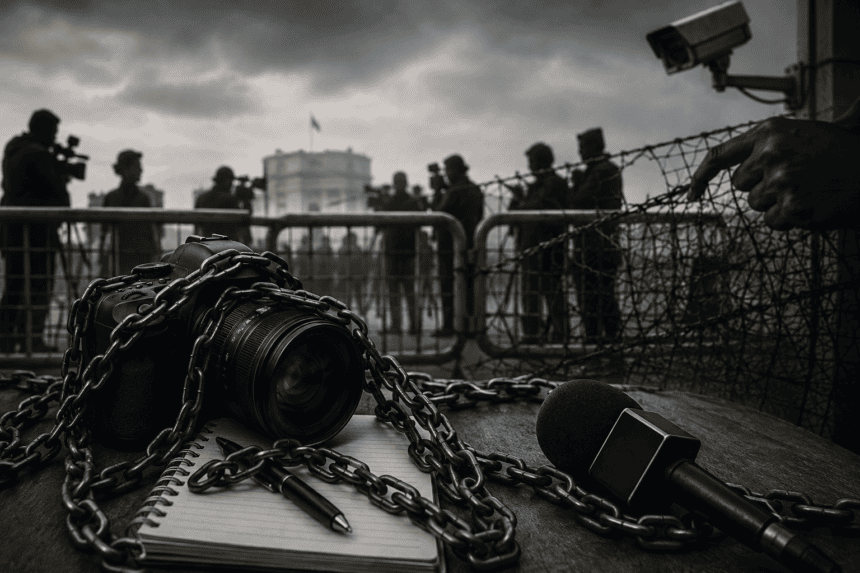
The Human Rights Commission of Pakistan (HRCP) and the Pakistan Federal Union of Journalists (PFUJ) have publicly challenged the government’s latest regulatory framework for foreign journalists, labeling it a direct threat to press freedom. The proposed rules, which mandate stricter security clearances and surveillance-like reporting requirements, have drawn sharp criticism from stakeholders who argue the state is tightening its grip on international narratives.
The core of the dispute lies in the government’s insistence on “security vetting” for foreign correspondents—a process that critics say is designed to intimidate reporters and discourage critical coverage of sensitive national issues. Both the HRCP and PFUJ maintain that these rules are not about administrative oversight, but rather a calculated effort to control the flow of information leaving the country.
“This is an attempt to turn journalism into a state-sanctioned activity,” a senior PFUJ representative told reporters on Tuesday. He warned that the government’s current trajectory risks isolating Pakistan globally, as international outlets may choose to shutter their local bureaus rather than subject their staff to state-mandated clearance protocols.
For the HRCP, the issue is about transparency. The commission issued a statement yesterday noting that the new rules lack a defined appeals process, leaving journalists vulnerable to arbitrary visa denials or expulsion. They argue that when the state becomes the sole arbiter of who can report and what they can say, the public loses its right to an independent, objective view of the country’s affairs.
The Ministry of Information, however, maintains that the guidelines are necessary to ensure that foreign reporters operate within the “legal and cultural parameters” of the state. Officials have repeatedly stated that national security interests override the standard operational freedoms typically afforded to international media houses.
The conflict highlights a deepening divide between the current administration and civil society groups. While the government portrays these measures as a necessary step toward national stability, media watchdogs see it as a continuation of a broader campaign to silence dissent.
As the government prepares to implement these rules, the international press corps now faces a stark choice: comply with the new surveillance mandates or risk losing their access to the country entirely. The silence from the ministry regarding the specific criteria for “security clearance” has only deepened the unease, leaving the future of foreign reporting in Pakistan increasingly precarious.