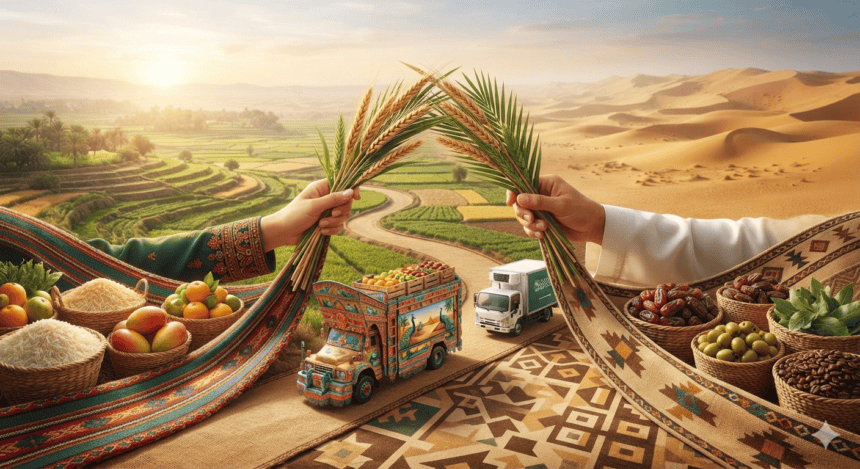
Pakistan and Saudi Arabia have finalized plans to accelerate agricultural trade and food security partnerships, marking a significant pivot in bilateral economic relations. The move comes as Riyadh seeks to diversify its food supply chains under its Vision 2030 initiative, viewing Islamabad as a primary hub for sustainable food production.
Federal officials in Islamabad confirmed this week that the framework for cooperation covers the entire agricultural value chain. The agreement moves beyond simple commodity exports, targeting joint ventures in livestock, climate-resilient crop production, and cold-chain logistics. For Pakistan, the deal offers a crucial lifeline to modernize its outdated farming infrastructure.
The Saudi appetite for food security is the primary driver here. Riyadh has committed to investing in Pakistan’s meat processing and dairy sectors, aiming to meet domestic demand while positioning its companies as regional distributors. By upgrading slaughterhouses and dairy plants to international standards, Pakistan expects to move away from low-value raw exports toward higher-margin processed goods.
“This isn’t just about selling wheat or rice,” a senior official at the Ministry of National Food Security said. “It’s about technology transfer and setting up a supply chain that keeps moving regardless of market volatility.”
Critics have pointed out that previous memorandums between the two nations often stalled due to bureaucratic hurdles and a lack of consistent policy. This time, the two governments have established a joint task force to monitor progress on a monthly basis, a move intended to bypass the red tape that previously stifled foreign direct investment.
The timing is critical. Pakistan’s economy is currently struggling with a narrow export base and a persistent balance-of-payments crisis. Expanding agricultural exports to the Gulf provides a necessary influx of foreign currency. For Saudi Arabia, the partnership mitigates the risks associated with relying on distant, unpredictable global markets for food staples.
While the exact dollar value of the incoming investment remains undisclosed, both sides have indicated that the focus will be on long-term infrastructure rather than short-term cash injections. The ultimate success of this initiative now rests on whether Islamabad can provide the stable regulatory environment required to keep Saudi private investors engaged.