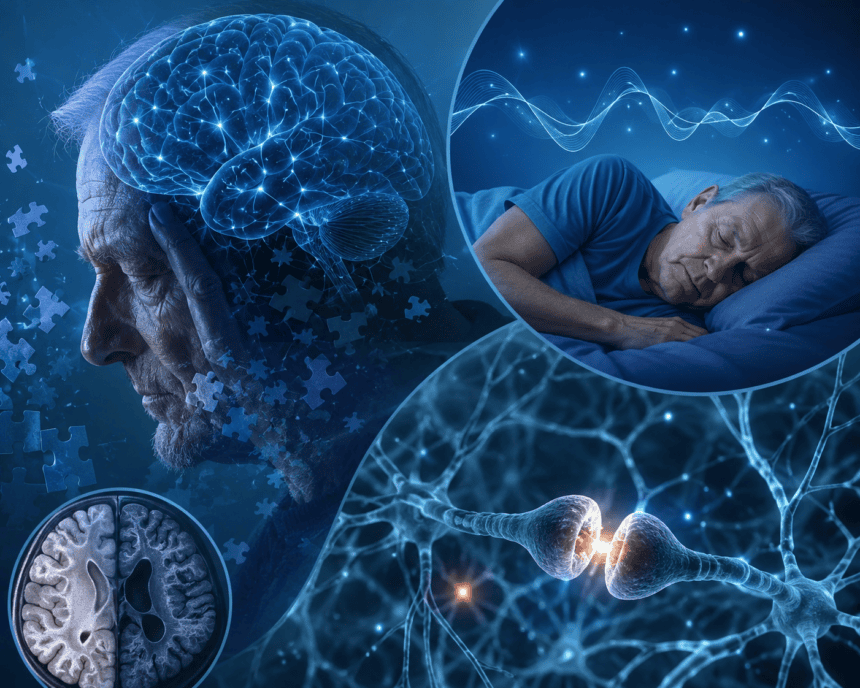
A breakthrough study published in *Nature Neuroscience* has identified a specific neural circuit that, when stimulated, restores healthy sleep patterns in models of Alzheimer’s disease. Scientists at the University of California, San Francisco (UCSF), found that activating a cluster of neurons in the brain’s hypothalamus can bypass the damage caused by amyloid-beta plaques, effectively resetting the internal clock that typically crumbles as the disease progresses.
Sleep disruption is often dismissed as a symptom of Alzheimer’s, but researchers now view it as a primary driver of the disease. Chronic insomnia accelerates the buildup of toxic proteins in the brain, creating a feedback loop that worsens cognitive decline. By targeting the “sleep-wake” switch directly, the research team successfully extended deep sleep cycles in lab models, suggesting a tangible target for future human clinical trials.
“We aren’t just treating the symptom; we are addressing a mechanism that keeps the brain’s waste-clearance system running,” said the lead investigator. The team utilized optogenetics—a technique using light to control neuron activity—to pinpoint the exact cluster responsible for the transition into slow-wave, restorative sleep.
The findings challenge the current standard of care. Most physicians rely on sedative-hypnotics to manage sleep issues in dementia patients. These drugs often come with heavy side effects, including increased confusion and fall risks. This new approach, however, focuses on neuro-modulation, aiming to nudge the brain back into its natural rhythm rather than forcing it into a chemically induced state.
The path to human application remains long. Identifying the circuit is a significant milestone, but developing a non-invasive way to stimulate these specific neurons in an aging human brain is the next hurdle. Current deep-brain stimulation technology is highly invasive, and researchers are already pivoting toward pharmacological or focused ultrasound methods that could mimic the neural activation seen in the study.
If successful, this could fundamentally shift how we treat neurodegenerative conditions. Restoring sleep may not cure Alzheimer’s, but it could offer the brain a fighting chance to clear out the proteins that cause the damage in the first place, potentially slowing the transition from mild cognitive impairment to full-blown dementia.
For now, the study provides a rare, concrete roadmap for reclaiming one of the most vital functions lost to the disease. The focus now turns to whether this hypothalamic switch remains as responsive in human patients as it is in the laboratory.