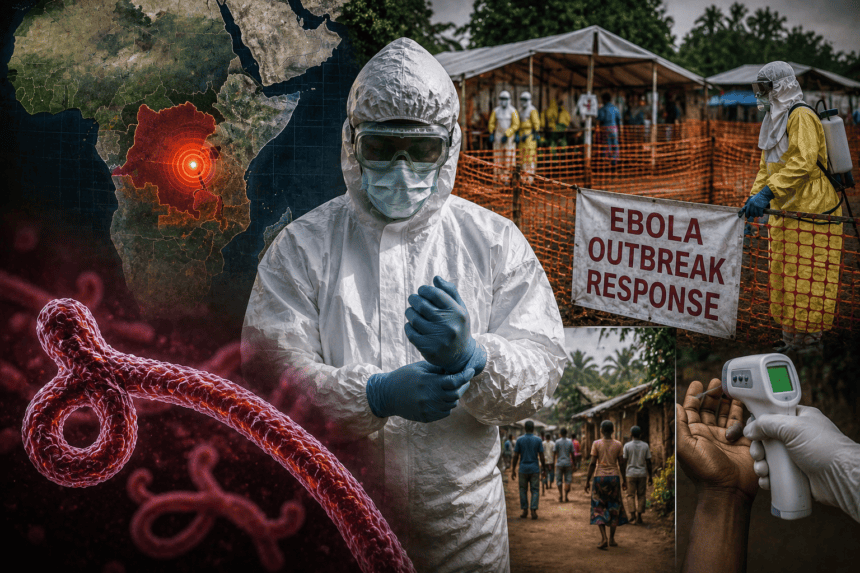
The Democratic Republic of Congo is once again grappling with an Ebola outbreak, a recurring crisis that continues to test the limits of the nation’s fragile healthcare infrastructure. Health authorities confirmed the latest cluster in the Equateur province, sparking immediate concern among aid organizations already stretched thin by regional instability and poor access to basic medical services.
This isn’t a new fight. The virus, which causes severe hemorrhagic fever and carries a high fatality rate, remains endemic to the region. The current surge centers on remote forest communities where the disease often spreads through contact with infected wildlife before jumping to humans.
“We are dealing with a population that is already exhausted,” said a field coordinator for an international medical NGO operating in the province. “When you combine the lack of cold-chain storage for vaccines with the extreme difficulty of reaching these villages by river, you aren’t just fighting a virus—you’re fighting geography.”
The stakes are immediate. While current containment protocols are more sophisticated than they were a decade ago, the logistical hurdles remain staggering. Health teams are currently scrambling to trace contacts in areas where roads are non-existent and communication relies on radio. Without rapid intervention, local outbreaks risk spilling into larger transit hubs, which could turn a localized emergency into a national health crisis.
Data from the Ministry of Health indicates that while the number of confirmed cases remains in the double digits, the transmission chains are proving difficult to map. The virus’s 21-day incubation period allows infected individuals to travel long distances before showing symptoms, effectively staying two steps ahead of mobile screening units.
The Congolese government, alongside the World Health Organization, has initiated ring vaccination efforts. This strategy targets the immediate social circles of those infected, attempting to create a barrier of immunity that halts further transmission. Yet, the success of this approach hinges entirely on public trust—a commodity that has been in short supply following years of political volatility.
Residents in affected districts are reporting a mix of fear and skepticism toward the arriving medical teams. Past experiences with international aid have left a legacy of distrust, complicating efforts to isolate patients or perform safe, dignified burials, which are essential for stopping the spread.
As teams push deeper into the rainforest, the focus remains on containment. If they fail to lock down these transmission chains within the next few weeks, the virus will likely find its way toward the major river ports, where medical resources are just as limited but the population density is exponentially higher.