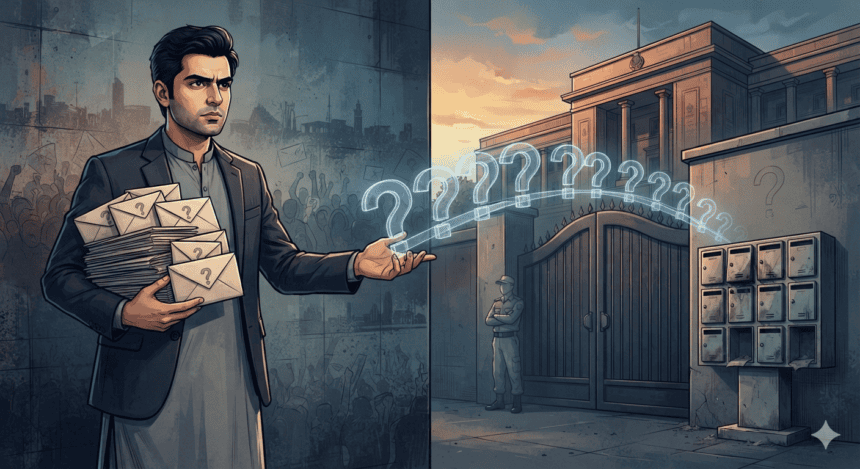
Lawyer and activist Jibran Nasir has publicly challenged Sindh Chief Minister Murad Ali Shah, accusing his administration of stonewalling a formal inquiry into the disappearance of Mir Raza Ali. Nasir, representing the affected family, confirmed that a list of 24 specific questions regarding the case remains unanswered by the Chief Minister’s office.
The case, which centers on the alleged abduction of Mir Raza Ali, has become a flashpoint for human rights advocates in Karachi. Nasir argues that the provincial government’s silence isn’t just bureaucratic negligence—it’s a calculated effort to evade accountability.
“We didn’t send these questions to create noise; we sent them to establish a paper trail,” Nasir said during a briefing. He contends that the government’s refusal to engage suggests a lack of political will to tackle the broader issue of enforced disappearances within the province.
The 24 questions focus on the timeline of the alleged abduction, the failure of local law enforcement to register an FIR, and the government’s refusal to utilize provincial surveillance data that could track the vehicles involved. Nasir’s team claims they have provided specific coordinates and vehicle registration details, yet the response from the CM House has been a consistent silence.
For the family of Mir Raza Ali, the silence is a personal blow. They have spent months moving between police stations and government offices, only to be met with shifting narratives and redirected phone calls. By escalating the matter to the Chief Minister, Nasir aimed to force a high-level intervention. Instead, the lack of response has left the family with few options outside of the courtroom.
The provincial government has yet to issue a formal rebuttal to Nasir’s claims. Typically, the Sindh administration maintains that such matters fall under the jurisdiction of federal security agencies, often citing the sensitivity of law and order protocols as a reason for restricted information sharing.
As the legal deadline for a response passes, Nasir’s next move is expected to be a formal petition in the Sindh High Court. He plans to use the unanswered list of questions as evidence of the state’s failure to protect a citizen’s fundamental rights.
Until the government provides a substantive answer, the case remains a stark reminder of the widening gap between the authorities and the families seeking answers in Karachi’s streets.