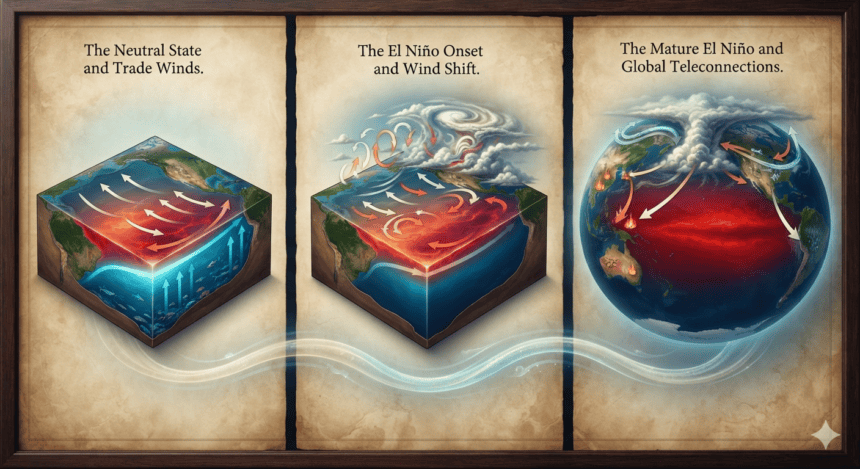
Global temperatures are surging, and the culprit is a familiar, recurring climate phenomenon. El Niño—the periodic warming of surface waters in the eastern Pacific—is no longer just a meteorological footnote; it is a primary driver of the extreme weather currently reshaping global food supplies, power grids, and local economies.
While the phenomenon behaves differently every cycle, three specific metrics illustrate why this year’s impact is hitting harder than previous iterations.
1. The Sea Surface Temperature Anomaly
The most immediate indicator of an active El Niño is the temperature spike in the Niño 3.4 region of the Pacific. Unlike the neutral baseline of the last three years, current satellite data shows surface waters hovering 2.0°C above the long-term average.
This isn’t just a minor fluctuation. This thermal energy acts as a massive heater for the atmosphere. When the ocean surface warms this rapidly, it shifts global jet streams, pulling rain away from traditional agricultural hubs in Southeast Asia and dumping it—often destructively—across the Americas. The shift is immediate, and the atmospheric response is brutal.
2. The Global Wheat Price Correlation
Market data from the last six months reveals a tightening correlation between El Niño’s progression and the price of staple grains. As heatwaves and droughts cripple yields in Australia and parts of India, global wheat futures have been forced upward.
Analysts point to a “compounding effect.” When El Niño-induced drought hits, it doesn’t just lower crop yields; it forces nations to scramble for imports, tightening global stockpiles. The resulting price surge acts as an invisible tax on developing nations, turning a Pacific weather pattern into a localized food security crisis in the Horn of Africa and beyond.
3. Energy Demand and Cooling Degree Days
Perhaps the most overlooked metric is the surge in “Cooling Degree Days” (CDDs)—a measure of how much energy is required to keep buildings at a comfortable temperature.
Data from major urban centers in the Southern Hemisphere shows a record-breaking increase in electricity demand that tracks almost perfectly with the peak intensity of this El Niño. Power grids in regions already struggling with aging infrastructure are being pushed to the breaking point. It’s a vicious cycle: the heat drives higher energy use, which often relies on fossil fuels, which in turn feeds the long-term warming trend that makes each subsequent El Niño more dangerous.
The Bottom Line
El Niño is not an isolated event. It is a catalyst. It takes existing climate vulnerabilities—strained power grids, fragile food chains, and rising baseline temperatures—and amplifies them.
As the current cycle continues to unfold, the data suggests we are past the point of simple “weather monitoring.” We are now managing a global systemic shock. The question for policymakers isn’t whether they can stop the Pacific from warming, but how much longer they can afford to ignore the rising costs of the aftermath.