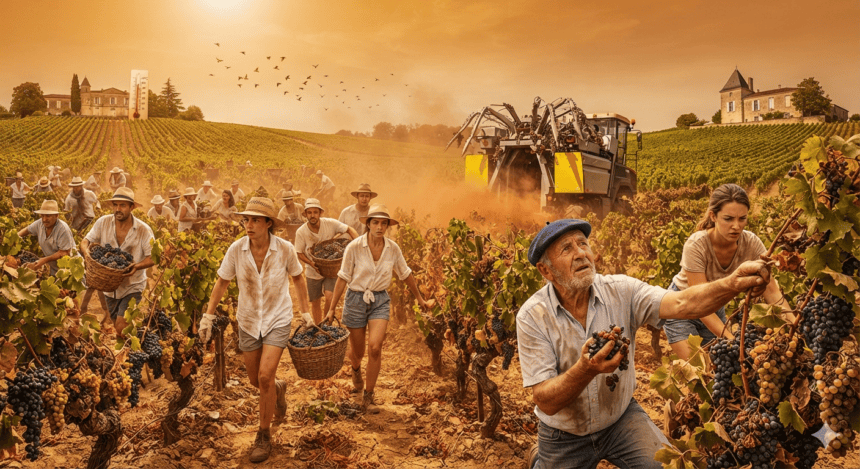
BORDEAUX — The harvest in France’s most prestigious vineyards began in late July this year. For winemakers accustomed to September picking, the timing is jarring. It is the earliest start on record for many estates, and it’s forcing a radical rethink of what French wine will look like in a warming world.
Heatwaves are no longer the exception; they’re the new baseline. In regions like Bordeaux and Languedoc, temperatures spiked early, pushing grapes to maturity weeks ahead of schedule. The result? Higher sugar levels, lower acidity, and a frantic scramble to get crews into the fields before the fruit literally cooks on the vine.
“We’ve never seen anything like it,” said Marc Penavayre, a winemaker in the Southwest. “The rhythm of the season is broken. We aren’t just fighting the weather anymore; we’re fighting to keep the identity of our wine intact.”
The stakes go beyond a difficult year. Wine is a cornerstone of the French economy, and its heritage is tied to specific regional profiles. When grapes ripen too fast, the alcohol content climbs while the delicate aromatics that define a classic Bordeaux or a crisp white disappear. Winemakers are now experimenting with canopy management—leaving more leaves to shade the grapes—and even planting different, more heat-resistant grape varieties.
Some estates have already begun trials with varieties typically found in Spain or Portugal, a move that would have been unthinkable a decade ago. It’s an admission that the current climate map of French viticulture is becoming obsolete.
This shift isn’t just about changing recipes; it’s about changing the law. France’s strict “Appellation d’Origine Contrôlée” (AOC) rules govern exactly what can be grown and how. As growers lobby for more flexibility, the tension between maintaining centuries-old tradition and surviving the next fifty years is hitting a breaking point.
For the casual consumer, the change might be subtle at first—a slightly bolder flavor or a higher price tag. For the growers, the reality is stark. They are no longer working with the seasons they inherited. They are working to build a future for a landscape that is rapidly leaving them behind.