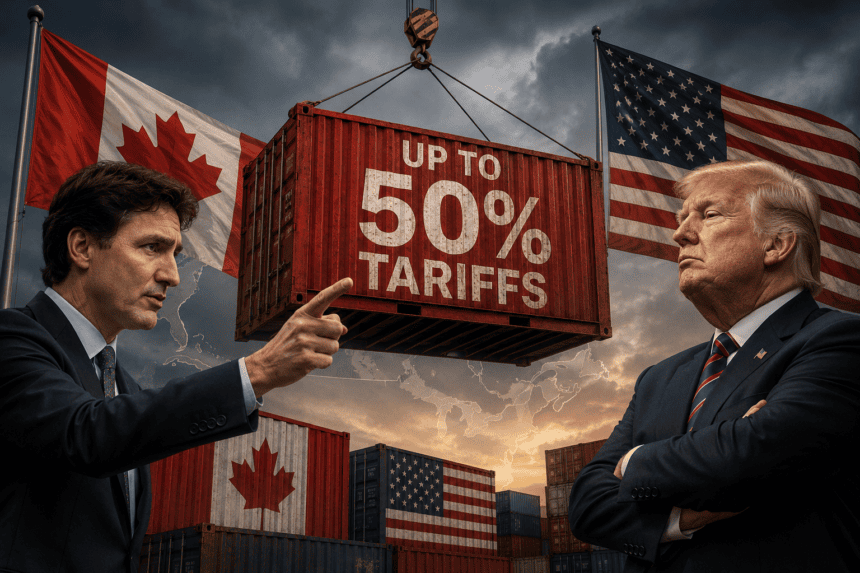
Canada is preparing a sweeping package of retaliatory tariffs reaching as high as 50% on U.S. goods, a direct response to President-elect Donald Trump’s vow to impose a 25% tax on all Canadian and Mexican imports upon taking office.
Deputy Prime Minister Chrystia Freeland confirmed the federal government is finalizing a list of targeted products. The strategy aims to hit U.S. industries that rely heavily on the Canadian market, effectively turning the trade dispute into a high-stakes economic standoff.
“We are very clear-eyed about the challenge,” Freeland said during a press conference in Ottawa. She signaled that while Canada prefers a negotiated settlement, the government is ready to use its full trade toolkit to protect domestic jobs and supply chains.
The proposed tariffs target sectors vital to the American economy, including aluminum, steel, and specific agricultural commodities. By focusing on goods produced in key electoral battleground states, Ottawa is betting that the economic pain will force the incoming administration to reconsider its blanket tariff policy.
Economists are already warning of the fallout. With roughly 75% of Canadian exports heading to the U.S., a prolonged trade war threatens to spike consumer prices on both sides of the border. Businesses in the manufacturing and automotive sectors are particularly vulnerable, as integrated supply chains rely on the frictionless movement of parts and finished goods.
Trump’s tariff threat, which he linked to concerns over border security and the flow of fentanyl, has rattled Canadian officials. Prime Minister Justin Trudeau has spent the last week in emergency meetings with provincial premiers, attempting to present a unified front to Washington.
The U.S. approach marks a significant departure from the stability established under the USMCA trade agreement. While the White House transition team maintains that these measures are necessary to curb illegal migration, Canadian officials argue that targeting a primary trading partner will only serve to fuel inflation and disrupt North American energy security.
Ottawa has not yet released the final list of affected products, but the message is clear: Canada won’t be a passive participant in a trade war. The coming weeks will determine whether the two nations can find a diplomatic off-ramp or if the continent is heading toward a period of protectionist volatility.