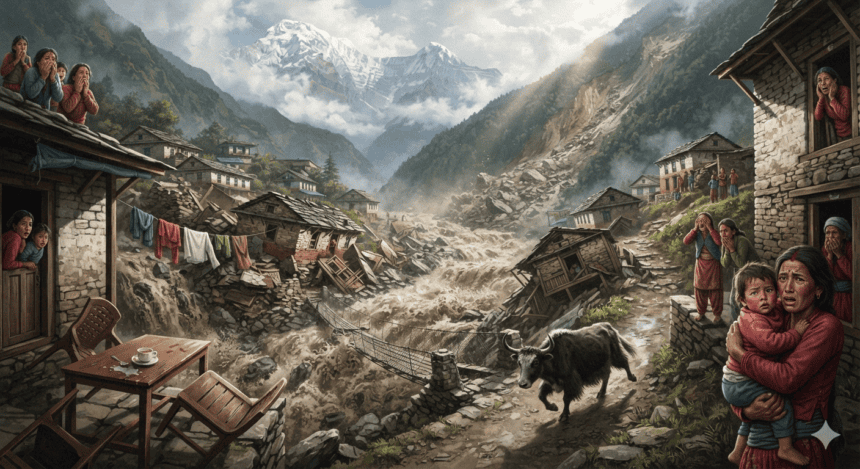
Jajarkot, Nepal — A wall of mud and debris slammed into the village of Barekot in the dead of night, leaving residents no chance to escape. By the time the first screams faded, half the settlement was gone.
Local authorities confirmed at least 14 people are dead, with 20 others still missing beneath the sludge. The landslide triggered by unrelenting monsoon rains hit just after 3:00 a.m. local time, catching families in their sleep.
For those who survived, the silence is the hardest part. “We heard a roar like a jet engine, then the house just twisted,” said Ram Bahadur, a local farmer who lost his brother in the collapse. He spent the morning digging with his bare hands until the ground shifted again, forcing him to stop.
The disaster highlights a recurring, lethal cycle in Nepal’s rugged terrain. While monsoon rains are expected, climate experts point to a shift in intensity. These storms are dumping more water in shorter windows, turning hillsides into saturated sponges that collapse without warning. The regional government’s early warning systems, designed to track river levels, failed to account for the localized mountain slope failure that wiped out this specific cluster of homes.
Rescue teams from the Nepal Army arrived by helicopter, but the terrain remains treacherous. Thick fog and continued light rain have grounded secondary support flights, leaving local police and volunteers to navigate the unstable debris field with shovels and pickaxes.
The provincial chief minister, speaking from a command center in Surkhet, promised compensation for the affected families. However, cash rarely replaces the loss of livestock and land—the primary livelihoods for most in this remote district.
As the sun sets, the search has slowed. The risk of secondary slides is too high to continue through the night. Families huddle in a nearby schoolhouse, waiting for news that, for most, will likely bring only more grief.
The rain continues to fall, and in the mountains of Jajarkot, another night of uncertainty has begun.