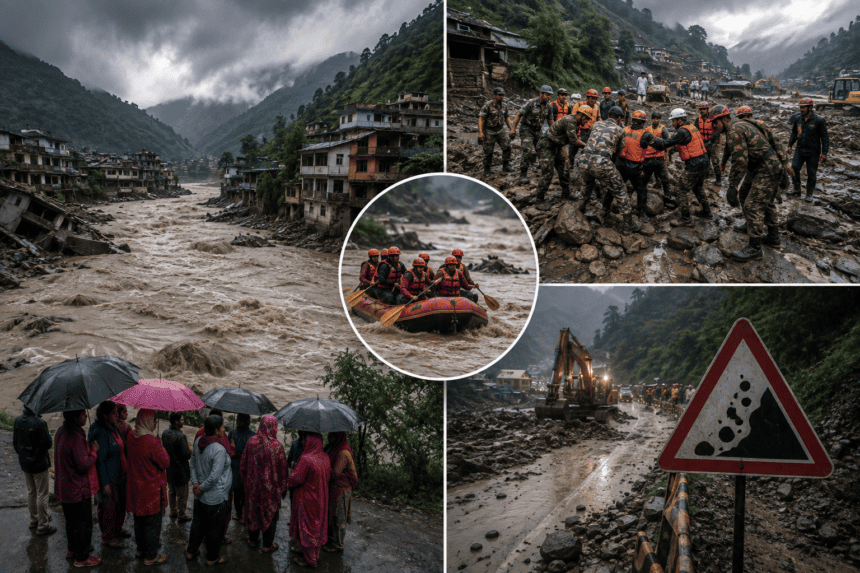
KATHMANDU — Rescue teams in Nepal face a race against time and weather as fresh flood warnings threaten to halt recovery efforts in the hardest-hit districts. After days of devastating landslides and flash floods claimed over 200 lives, the arrival of new storm clouds has forced authorities to reconsider the safety of ongoing operations.
The death toll continues to climb as responders reach isolated mountain villages. Many survivors remain trapped under debris, with rescue helicopters grounded by low visibility and high winds across the Kathmandu Valley and surrounding regions. The Department of Hydrology and Meteorology issued an alert early Wednesday, warning of further heavy rainfall in the western and central provinces, potentially triggering fresh landslides.
“We are balancing the need to find survivors with the reality that our teams are now in the path of the next slide,” a senior official at the National Disaster Risk Reduction and Management Authority said. He did not confirm how many people remain unaccounted for, citing the difficulty of communication in areas where roads have been washed away.
The scale of the destruction is staggering. Entire stretches of the Prithvi Highway — the primary link between the capital and the rest of the country — have disappeared into the Trishuli River. Thousands of commuters remain stranded, while those in rural pockets are running low on food, clean water, and medical supplies.
The government has faced mounting criticism for its slow deployment of heavy machinery to remote areas. Residents in Dhading and Kavrepalanchok, two of the worst-affected districts, say they have been digging through mud with nothing but shovels and bare hands for the last 48 hours.
“The government promised helicopters yesterday, but the sky stayed empty,” said a local shopkeeper in a village outside Kathmandu. “We don’t need promises; we need a way out.”
While the monsoon season is typically winding down this time of year, climate experts point to a shift in weather patterns that has left the region more vulnerable to extreme, unpredictable bursts of rain. This isn’t just a seasonal hazard anymore; it’s an infrastructure crisis that the current disaster management framework is struggling to absorb.
For now, the rescue teams are waiting. If the clouds break, they’ll push back into the wreckage. If the rain intensifies, they’ll have to pull back to higher ground, leaving hundreds of families waiting in the dark for a rescue that may already be too late.