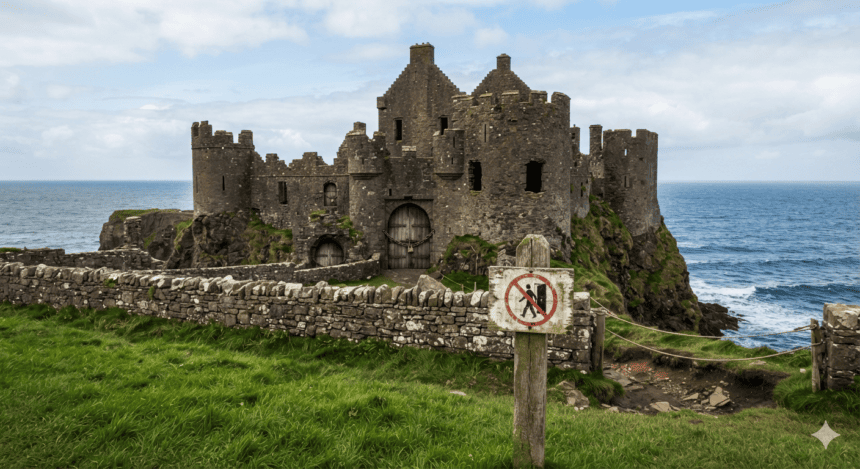
Classiebawn Castle sits on the edge of the Mullaghmore Peninsula in County Sligo, a silhouette of Victorian grandeur against the raw Atlantic. It’s a photographer’s dream, but for the public, the gates are strictly off-limits.
The estate remains private property, currently under the stewardship of the family of Hugh Ashley Cooper. While tourists flock to the nearby coastal road to snap pictures of the 19th-century fortress, they hit a hard stop at the perimeter. There are no guided tours, no gift shops, and no public entry points.
The exclusivity isn’t just about privacy; it’s a matter of heritage and legacy. The castle was once the summer home of Lord Louis Mountbatten, a central figure in British military history. Mountbatten was assassinated by the IRA in 1979 while sailing just off the coast of the estate. That tragedy turned the castle into a site of somber historical weight, one that the current owners have largely kept shielded from the commercial tourism circuit.
For locals, the castle is a landmark that defines the Sligo skyline, yet it remains a world apart. It doesn’t function as a museum or a national monument, despite its architectural significance. It is a private residence that happens to look like a postcard.
Travelers often find themselves confused by the lack of accessibility. Online forums and travel blogs are littered with questions about how to gain entry, only to be met with the same answer from residents: you can admire the view from the road, but the private drive is strictly for those invited.
The irony is that the castle’s isolation is precisely what makes it compelling. It hasn’t been scrubbed clean for the tourist trade. It remains, for better or worse, a private space holding onto its own history.
If you find yourself in Sligo, take the photo from the harbor or the cliff path. Just don’t expect to walk through the front door. Some places, it seems, are meant to be seen from a distance.