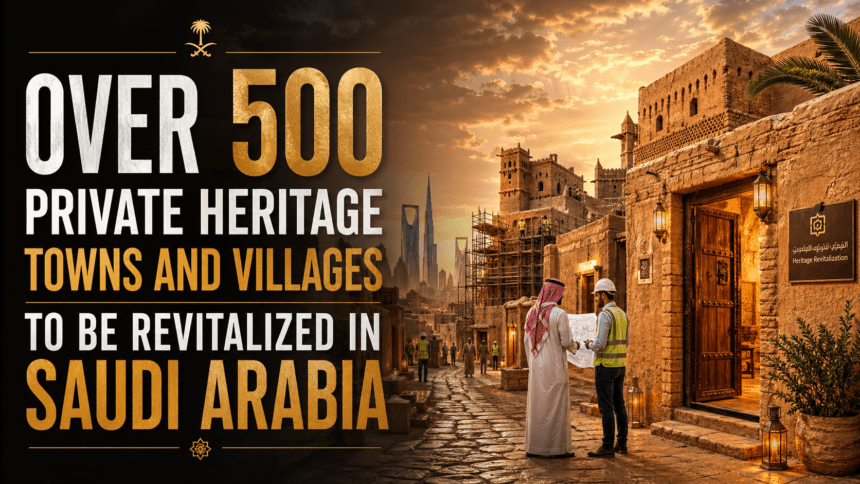
Saudi Arabia has announced a new initiative to revive more than 500 privately owned heritage towns and villages, in what officials are framing as both a preservation effort and a local development project. Culture Minister Prince Bader bin Abdullah bin Farhan unveiled the plan at the close of the Nonprofit Cultural Sector Forum in Riyadh on April 16, saying it is meant to help communities restore valuable historic settlements while protecting their architectural identity.
The initiative is focused on community participation rather than state-led restoration alone. According to the minister’s remarks, the goal is to support residents and local groups in rehabilitating these sites, then developing, managing and activating them so they can function as cultural and economic assets for surrounding communities. Applications for the program are expected to open in the fourth quarter of 2026.
That economic angle is a big part of the story. Saudi authorities are not presenting these places simply as old villages to be preserved behind barriers, but as living spaces that can feed into tourism, cultural activity and local employment. In effect, the government is trying to link heritage protection with broader regional growth, a theme that has become increasingly visible across the Kingdom’s cultural policy.
The announcement also fits into a much wider heritage push already underway. Saudi Arabia’s official news agency has reported that the Asir region alone contains more than 4,300 heritage villages, some over 500 years old, while the Heritage Commission said in 2024 that 500 new sites were added to the urban heritage register, bringing the national total to 4,540 registered sites. Those figures help explain why Riyadh is now moving beyond registration and toward restoration and reuse.
What makes this initiative notable is that it targets privately owned heritage settlements, an area that often falls into a grey zone between public heritage policy and private property limitations. If implemented at scale, the plan could unlock restoration work in places that have long been structurally vulnerable or economically neglected, especially in regions where families still retain ownership but lack the money or institutional backing to rehabilitate old buildings. That is an inference based on the initiative’s design and Saudi Arabia’s existing stock of heritage sites.
For Saudi Arabia, the message is fairly clear: heritage is no longer being treated as a side project. It is being folded into the country’s economic and cultural transformation, with historic villages positioned not just as reminders of the past, but as part of the Kingdom’s future development model. Whether the program can deliver on that promise will depend on funding, local participation and how quickly the application and restoration process moves once it opens later this year.