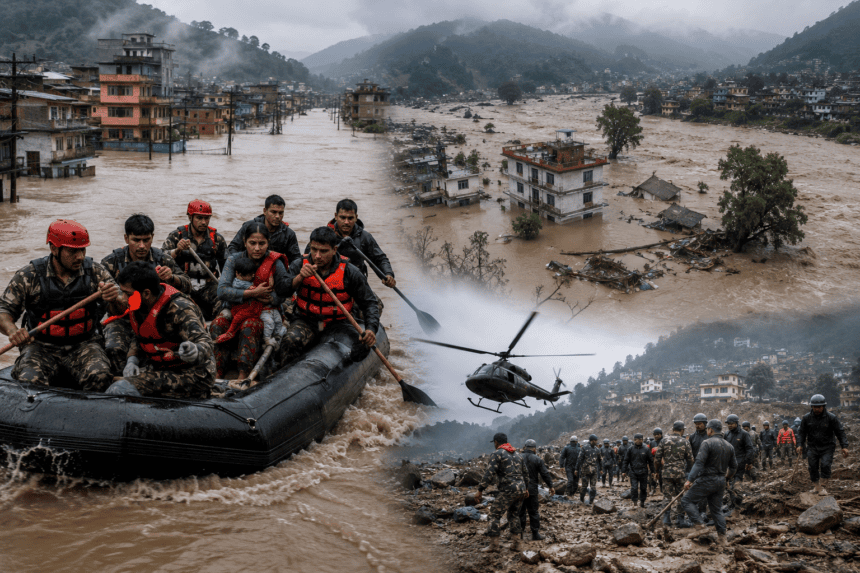
The search for survivors in Nepal turned desperate today as authorities doubled the number of missing persons following catastrophic flooding and landslides. Officials now estimate that at least 60 people remain unaccounted for, while the confirmed death toll has climbed past 200.
Entire villages have been buried under mud and debris. The monsoon-driven deluge, which struck with relentless intensity over the weekend, has left major highways severed and communities in the Kathmandu Valley cut off from essential aid. Rescue operations are currently hampered by damaged bridges and blocked mountain passes, forcing emergency teams to rely on helicopters where the weather allows.
Home Minister Ramesh Lekhak told reporters that the government’s priority is reaching isolated areas where communication lines remain down. “We are deploying every available resource,” he said, though he acknowledged the sheer scale of the destruction is overwhelming local infrastructure.
The Kathmandu Valley, home to the capital, has been hit hardest. In the suburb of Lalitpur, residents spent the night on rooftops as the Bagmati River breached its banks, sweeping away homes and vehicles. Economic analysts are already warning of long-term consequences for the region, as the destruction of local markets and critical transport links threatens to spike food prices and stall local trade for months.
Climate scientists point to an increasingly unpredictable monsoon season as the primary driver of the disaster. While heavy rainfall is typical for this time of year, the intensity of this weekend’s storm cycle has shattered previous records. Experts argue that rapid, unplanned urban expansion in flood-prone areas has turned manageable weather events into humanitarian crises.
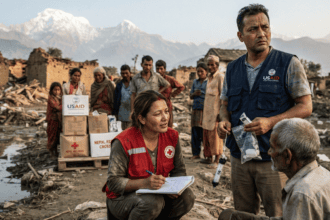
As the rain finally begins to taper off, the focus shifts from rescue to the grim task of recovery. Thousands are now homeless, huddled in makeshift shelters with little access to clean water or medicine. The government faces mounting pressure to provide immediate relief, but with the monsoon season still active, the window for effective rescue is closing fast.
For now, the death toll is expected to rise as search crews reach the more remote, landslide-stricken villages in the hills. The true extent of this disaster will not be clear until the mud clears and the last of the isolated mountain settlements are reached.