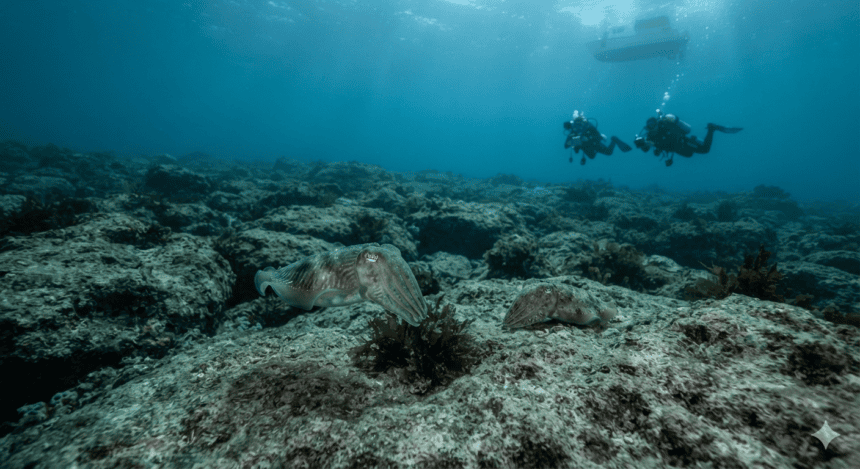
Whyalla, South Australia — The annual gathering of tens of thousands of giant Australian cuttlefish in the Spencer Gulf has hit a mysterious wall. Usually, the rocky reefs off the coast of Whyalla turn into a chaotic, color-shifting underwater ballroom by late May. This year, the water remains largely empty.
Marine researchers are scrambling to explain the disappearance of the *Sepia apama*. While the event typically peaks between June and August, early surveys show population numbers are a fraction of what they were this time last year.
The stakes are high for the local economy. The “cuttlefish migration” has transformed Whyalla from a quiet industrial town into a global destination for eco-tourists and underwater photographers. Local dive operators, who rely on the three-month window to sustain their businesses, are already reporting cancellations.
“We’re seeing a few individuals here and there, but the massive, frantic spawning behavior we expect? It’s absent,” said one local marine guide. “The water temperature is slightly higher than the historical average, but whether that’s the smoking gun, we don’t know yet.”
Marine biologists point to a complex mix of environmental variables. Cuttlefish are sensitive creatures with short, one-year lifespans. If the conditions during their larval stage—roughly 12 months ago—were off, the current population could be suffering from a “recruitment failure.”
The species is known for its extreme camouflage, pulsing with skin-deep chromatophores to signal aggression or attraction. When the population density drops, the frantic, high-stakes competition for mates that defines this event simply fails to trigger.
State government officials have yet to issue a formal statement, but internal reports suggest that ocean acidification and shifting currents in the Spencer Gulf are being treated as the primary suspects. The Gulf is already under pressure from industrial activity, and any further disruption to the delicate salinity levels could prove fatal for the species’ breeding grounds.
For now, the Whyalla reefs remain quiet. The tourists who traveled thousands of miles are staring into the blue, waiting for a spectacle that may not arrive this season.
Whether this is a temporary blip or a signal of a permanent collapse in the local ecosystem remains the question haunting the local dive community. For the cuttlefish, the window is closing fast. If they don’t arrive in the next two weeks, the season is effectively over.