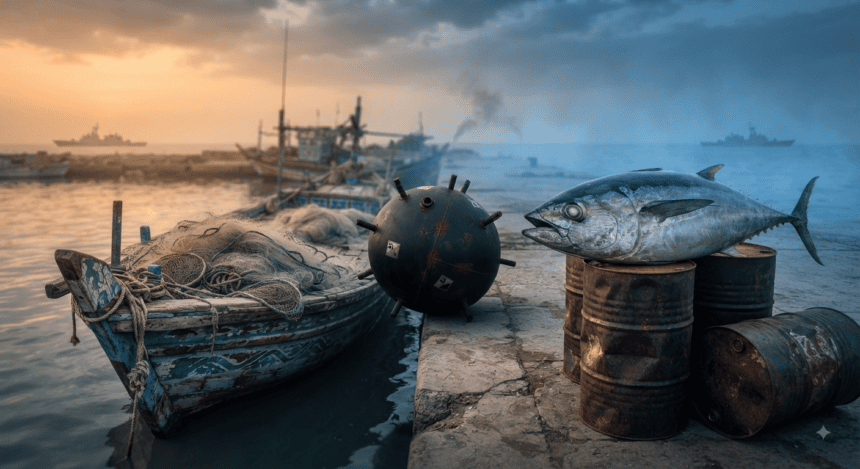
The deep-sea fishing fleet in Karachi is sitting idle. Hundreds of vessels, once destined for international waters to haul in high-value tuna, are now moored at the docks, their crews sidelined by an escalating crisis that has nothing to do with catch quotas and everything to do with shifting geopolitical lines.
The issue stems from the tightening of US secondary sanctions targeting Iran. Pakistani exporters, many of whom have long-standing trade routes involving the Persian Gulf, are finding themselves caught in the crossfire. US financial monitors are increasingly scrutinizing transactions linked to regional maritime trade, forcing Pakistani banks to freeze accounts or block payments associated with vessels that have even a tangential connection to Iranian-flagged ships or waters.
For a local fishing industry already struggling with rising fuel costs, this is a financial chokehold.
“We are being treated like we are smuggling contraband,” said a senior member of the Karachi Fisherfolk Forum. “We are fishermen. We follow the schools of tuna, not the political maps. But the banks don’t care about the logistics—they just see the risk and pull the plug.”
The impact is immediate. Tuna, which requires cold-chain logistics and rapid international export to maintain its market value, is rotting in local warehouses. Without the ability to process payments through standard international banking channels, exporters are effectively barred from the global market.
Industry analysts point to a lack of clear guidance from Islamabad. While the State Bank of Pakistan has issued general circulars regarding compliance with international sanctions, they haven’t provided a framework for small-scale exporters to navigate the “gray zone” of maritime commerce in the Arabian Sea. The result is a blanket de-risking strategy by banks that prioritizes avoiding US sanctions over supporting domestic exports.
Some exporters are attempting to pivot to alternative markets in the Far East to bypass the Gulf-linked banking hurdles. This shift is expensive and requires new supply chain infrastructure that most local operators simply cannot afford.
The US Treasury’s Office of Foreign Assets Control (OFAC) has not issued any specific exemptions for the Pakistani fishing sector, leaving local trade bodies to fend for themselves. As the diplomatic standoff between Washington and Tehran persists, the reality for Karachi’s fishermen is simple: the geopolitical tension is costing them their livelihood, one empty net at a time.
Until a formal mechanism is established to distinguish legitimate food exports from sanctioned commercial activity, the docks will remain quiet. The tuna may be swimming, but for now, it’s effectively off-limits.