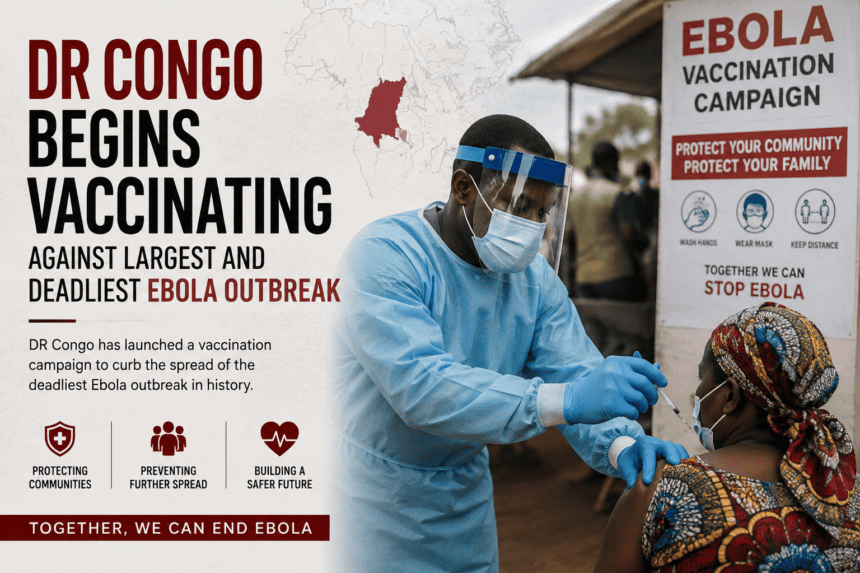
GOMA, DR Congo — Health authorities in the Democratic Republic of Congo have launched a critical vaccination campaign across the country’s eastern provinces, aiming to contain the largest and most lethal Ebola outbreak in the region’s history.
The rollout follows a sharp spike in transmission rates that have overwhelmed local clinics. With the virus claiming hundreds of lives in just the last few weeks, the World Health Organization (WHO) and local health teams are prioritizing frontline workers and communities living near the epicenter of the current surge.
The stakes are high. The virus is moving through densely populated trade hubs, making traditional containment measures—like contact tracing and isolation—incredibly difficult to execute. Dr. Jean-Jacques Muyembe, the lead coordinator for the response, warned that the current pace of infection is unlike anything the country has navigated in recent years.
“We are racing against time,” Dr. Muyembe told reporters in Goma. “The vaccine is our only shield, but it has to reach the right people before the virus does.”
Logistical challenges remain the primary hurdle. Many of the affected zones are geographically isolated or caught in areas of active conflict, forcing medical teams to rely on helicopters and motorbikes to transport the vaccines, which require strict cold-chain storage.
This outbreak has already surpassed the death tolls of the 2018-2020 Equateur province crisis. While the vaccine has proven effective in clinical trials, the sheer volume of doses required to create a “ring of immunity” around the hotspots is straining the country’s limited medical supplies.
The Ministry of Health has urged the public to cooperate with vaccination teams, noting that rumors and misinformation continue to fuel distrust in some rural districts. Health workers are now partnering with local tribal leaders to bridge the gap, hoping to lower the vaccination refusal rate that hampered past efforts.
As the vaccination drive gains momentum, the true test will be whether the government can secure enough sustained international funding to cover the hardest-to-reach areas. For now, the focus remains on stopping the spread in the major transit corridors—a move that epidemiologists say is the only way to prevent a nationwide catastrophe.