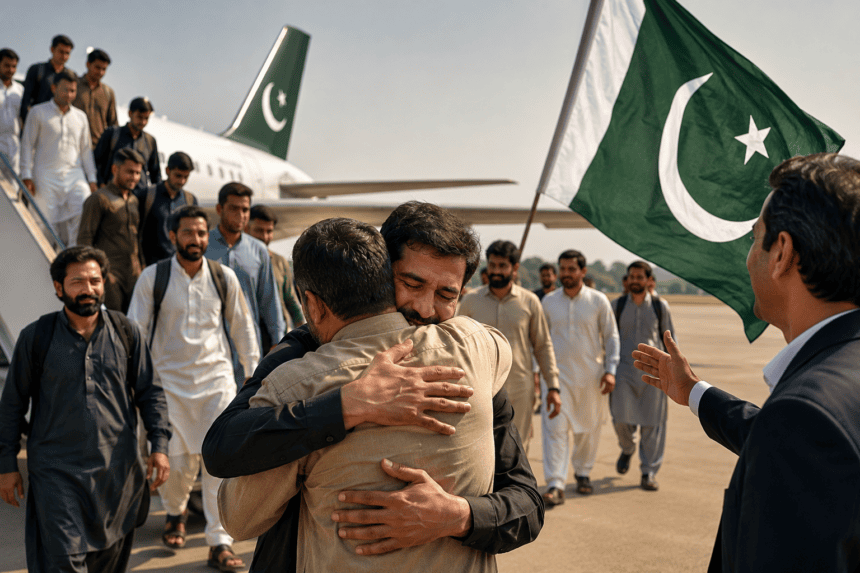
WAGAH BORDER — Twenty-five Pakistani citizens crossed the Wagah border into their home country on Monday, ending months—and in some cases, years—of detention in Indian prisons.
The group, comprised primarily of fishermen who strayed into Indian territorial waters, walked across the border gates just after midday. They were received by officials from the Pakistan Rangers and the Ministry of Foreign Affairs. For most, the return marks the end of a harrowing period spent in high-security facilities in Gujarat, far from their families in Sindh.
The release follows a recurring diplomatic rhythm between Islamabad and New Delhi. Both nations frequently swap lists of prisoners under the 2008 Consular Access Agreement, a rare point of cooperation between the two nuclear-armed rivals. Despite the diplomatic friction that often freezes high-level talks, the repatriation of fishermen remains one of the few functional channels of communication.
The men appeared visibly exhausted as they underwent initial medical screenings at the border post. Some carried small plastic bags containing the few possessions they were allowed to keep during their incarceration. While the Foreign Office has yet to release a detailed breakdown of the individuals’ origins, most of those released are residents of coastal towns like Badin and Thatta.
Their return highlights the precarious reality of maritime boundaries in the Arabian Sea. The border remains poorly marked, and for fishermen navigating by traditional methods, crossing the “Sir Creek” area is an easy mistake to make. Once apprehended by the Indian Coast Guard, these men often face months of legal limbo, waiting for consular access and the eventual verification of their citizenship.
The repatriation process was facilitated by the Edhi Foundation, which provided transport and immediate support for the returnees. Faisal Edhi, head of the organization, noted that while the release is a relief, it does not address the underlying issue of maritime border confusion that continues to trap poor laborers on both sides.
The men will now undergo debriefing before being allowed to return to their respective villages. For the families waiting in Sindh, the arrival of these 25 individuals is a reprieve, though hundreds more remain in Indian custody, waiting for their turn to cross the border.