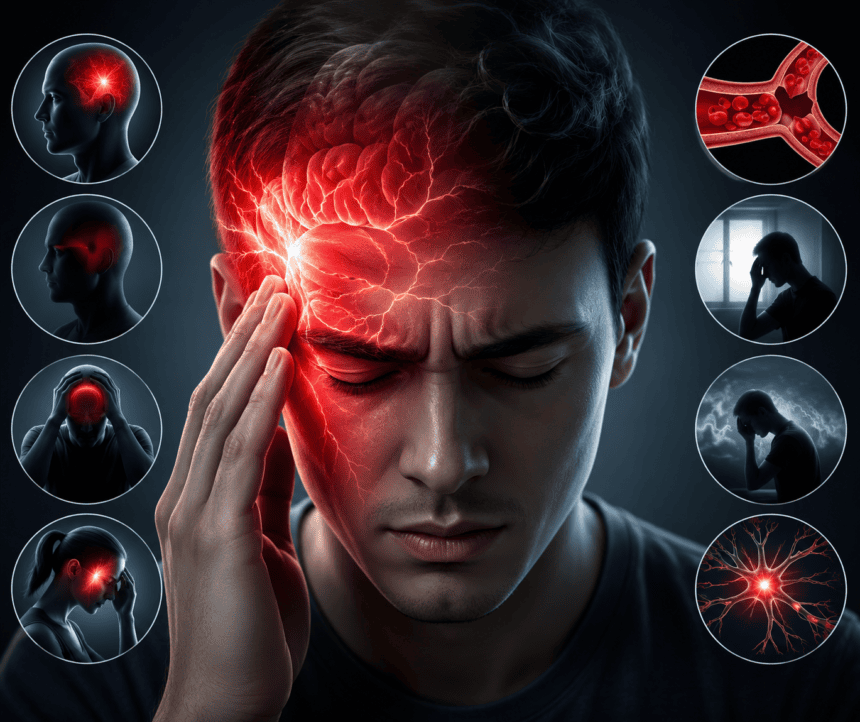
A headache on the left side of the head can be uncomfortable and sometimes worrying. While one-sided head pain is commonly associated with migraine, several other conditions can also cause pain on just one side of the head. The location of the pain can provide useful clues, but it usually cannot identify the exact cause on its own.
Headaches can feel different from person to person. Some people experience a dull ache or pressure, while others describe throbbing, pounding, stabbing or burning pain. The pain may occur around the temple, forehead, eye, back of the head or extend into the neck.
Common Causes of a Left-Sided Headache
1. Migraine
Migraine is one of the most common reasons for pain affecting one side of the head. The pain is often moderate to severe and may feel throbbing or pulsating. It can become worse with normal physical activity.
A migraine may also cause nausea, vomiting and sensitivity to light or sound. Some people experience an aura before or during an attack, which can include flashing lights, blind spots, tingling, numbness or difficulty speaking.
Migraine attacks can last for several hours and, if untreated, may continue for up to 72 hours.
2. Tension Headache
Tension headaches are extremely common and are often associated with stress, fatigue or poor sleep. They usually cause mild to moderate pressure or aching rather than the intense throbbing commonly associated with migraine.
Although tension headaches typically affect both sides of the head, some people may notice pain that feels more prominent on one side.
Neck and shoulder muscle tenderness can also accompany this type of headache.
3. Cluster Headache
Cluster headaches are less common but can cause extremely severe pain on one side of the head, particularly around or behind one eye.
The affected eye may become red or watery, and the person may also experience a blocked or runny nose on the same side. Attacks tend to be relatively short but can occur repeatedly.
Because cluster headaches can be very painful, recurring attacks should be evaluated by a healthcare professional.
4. Dehydration and Lifestyle Factors
Not drinking enough fluids can contribute to headaches. A person may also develop head pain after inadequate sleep, skipping meals, excessive stress or changes in their usual caffeine intake.
Dehydration-related headaches may occur throughout the head or in a particular area, including one side.
Maintaining regular meals, drinking enough fluids and getting consistent sleep can help reduce some common headache triggers.
5. Sinus or Facial Problems
Problems affecting the sinuses, eyes, teeth or jaw can sometimes cause pain that feels like a headache. Pain may be felt around the forehead, cheeks, eyes or temples.
However, not every headache around the face or forehead is caused by sinus problems. Migraine can also produce pain around the eyes and face, so other symptoms are important when determining the likely cause.
What Does the Location of the Pain Tell You?
The location can provide clues, but it is not enough to diagnose a headache by itself.
For example, migraine commonly causes one-sided pain, while tension headaches more often affect both sides. Cluster headaches tend to cause severe pain around one eye on one side.
Doctors usually consider several factors, including:
- Where the pain begins
- Whether it is sharp, dull or throbbing
- How severe it is
- How long it lasts
- How frequently it occurs
- Whether movement makes it worse
- Whether nausea or vomiting occurs
- Whether there are vision changes
- Whether light or sound makes the pain worse
- Whether there are neurological symptoms
Keeping track of these details can make it easier for a healthcare professional to identify the type of headache.
When Should You Be Concerned?
Most headaches are not caused by a dangerous condition. However, a new, sudden or unusually severe headache should not be ignored.
Seek emergency medical attention if a headache:
- Starts suddenly and becomes extremely severe
- Is described as the worst headache you have experienced
- Occurs after a head injury
- Comes with weakness or numbness
- Causes difficulty speaking or understanding speech
- Causes confusion or loss of consciousness
- Causes seizures
- Is accompanied by significant vision changes
- Occurs with a stiff neck and high fever
- Is associated with difficulty walking or loss of balance
These symptoms can sometimes occur with serious conditions such as stroke, bleeding in or around the brain, meningitis or other neurological problems.
When to See a Doctor for Repeated Left-Sided Headaches
Even if the headache is not an emergency, medical advice may be appropriate when the headaches keep returning.
Consider making an appointment if your headaches:
- Are becoming more frequent
- Are more severe than usual
- Have changed from your usual pattern
- Interfere with work, school or sleep
- Do not improve with appropriate treatment
- Require pain medication frequently
- Continue for unusually long periods
Frequent headaches may require a proper diagnosis and a more specific treatment plan.
How Can You Manage a Mild Headache?
For an occasional mild headache, simple measures may help. Resting in a quiet environment, drinking enough water, maintaining regular meals and getting adequate sleep can be useful.
If light or sound makes the headache worse, reducing exposure to bright screens and loud environments may provide some relief, particularly during a migraine.
Over-the-counter pain medicines may help some people, but they should be used according to the label and not excessively. Frequent use of headache medicines can itself become part of a recurring headache problem.
Keep a Headache Diary
If left-sided headaches happen regularly, keeping a simple headache diary can be useful. Record:
- Date and time the headache started
- How long it lasted
- Where the pain occurred
- Pain intensity
- What you ate and drank
- Sleep duration
- Stress levels
- Menstrual cycle, if relevant
- Medicines taken
- Other symptoms such as nausea or sensitivity to light
This information can help identify patterns and give a doctor a clearer picture of the problem.
Final Thoughts
A headache on the left side does not necessarily indicate a serious health problem. Migraine is a common cause of one-sided head pain, while tension headaches, cluster headaches, dehydration and other conditions can also produce pain in a specific area.
The type, severity, duration and accompanying symptoms are more important than the side of the head alone. Occasional mild headaches may improve with rest, hydration and healthy routines, but sudden severe pain or headaches accompanied by neurological symptoms require immediate medical attention.
If left-sided headaches are frequent, worsening or noticeably different from your usual headaches, a healthcare professional can help determine the underlying cause and recommend appropriate treatment.