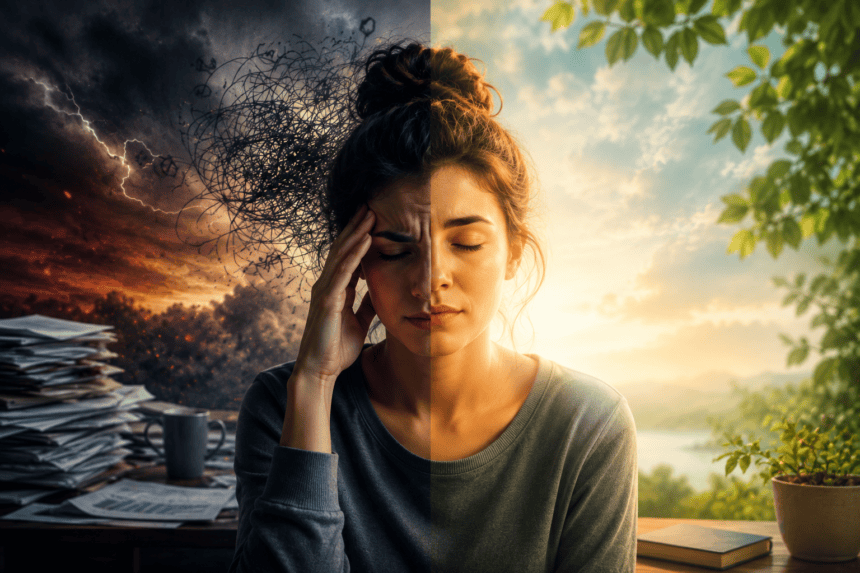
Stress and anxiety are common experiences, and the two can sometimes feel very similar. Both may cause worry, restlessness, difficulty concentrating, muscle tension and changes in sleep.
However, stress and anxiety are not exactly the same. Understanding the distinction can help people recognise what they are experiencing and determine when additional support may be needed.
What Is Stress?
Stress is generally the body’s response to a specific challenge, demand or situation.
For example, someone may feel stressed before an examination, during a difficult work project, after an argument or when dealing with financial responsibilities.
When the stressful situation is resolved, the feelings may gradually decrease.
Stress can sometimes be useful. A moderate amount may increase alertness and motivation, helping a person respond to an important situation.
What Is Anxiety?
Anxiety involves feelings of fear, worry or apprehension. Unlike ordinary stress, anxiety may continue even when there is no immediate or obvious threat.
A person may repeatedly worry about possible future events or imagine negative outcomes.
Occasional anxiety is normal. However, persistent or excessive anxiety that interferes with daily life may indicate an anxiety disorder and may require professional assessment.
Common Symptoms of Both
Stress and anxiety can produce overlapping physical and emotional symptoms, including:
- Racing thoughts
- Irritability
- Muscle tension
- Headaches
- Difficulty sleeping
- Rapid heartbeat
- Sweating
- Difficulty concentrating
- Feeling restless
- Changes in appetite
Because the symptoms overlap, it is not always easy to identify the cause based on one symptom alone.
Key Difference Between Stress and Anxiety
One of the simplest ways to distinguish them is to consider what is triggering the feelings and how long they last.
Stress is usually linked to an identifiable external situation. Once the situation changes or ends, the stress response may improve.
Anxiety can persist without a clear immediate trigger and may continue even when circumstances are relatively safe.
Can Stress Turn Into Anxiety?
Long periods of severe or unmanaged stress can contribute to emotional difficulties and may worsen anxiety in some people. However, stress does not automatically develop into an anxiety disorder.
Individual experiences vary, and several factors can influence mental wellbeing.
Ways to Manage Everyday Stress
Simple habits may help reduce everyday stress:
Get enough sleep: A consistent sleep schedule can support emotional regulation.
Stay physically active: Regular physical activity can help improve mood and reduce tension.
Practise slow breathing: Taking a few minutes for controlled, slow breathing may help the body move away from a heightened stress response.
Limit excessive caffeine: Too much caffeine can make some people feel more restless or anxious.
Take breaks: Short breaks during work or study can help prevent mental overload.
Talk to someone: Sharing concerns with a trusted person can make stressful situations feel more manageable.
When to Seek Professional Help
If anxiety or stress becomes persistent, overwhelming or starts interfering with work, studies, relationships, sleep or everyday activities, speaking with a qualified mental health professional can be helpful.
Professional support is especially important when symptoms are severe or difficult to manage independently.
Bottom Line
Stress is usually a response to a specific challenge, while anxiety can continue even when an immediate threat is absent. Although both can cause similar physical and emotional symptoms, understanding their differences can help people recognise when everyday stress has become something that deserves additional attention.