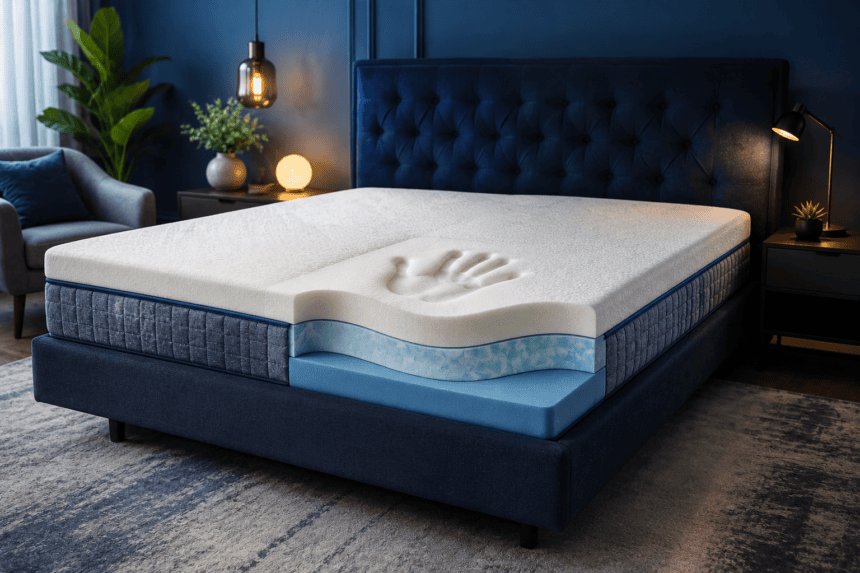
A mattress can have a major influence on comfort and sleep quality. Memory foam mattresses have become popular because they are designed to contour around the body, potentially helping relieve pressure and reduce movement across the bed.
However, there is no single memory foam mattress that is ideal for everyone. Sleeping position, body weight, firmness preference, temperature sensitivity and budget can all affect which mattress is most suitable.
1. Medium-Firm Memory Foam Mattress
A medium-firm mattress can provide a balance between cushioning and support. It may be suitable for people who want the body-contouring benefits of memory foam without feeling as though they are sinking too deeply.
2. Cooling Memory Foam Mattress
Traditional memory foam can retain heat. Cooling models may use breathable covers, ventilation systems or specialised materials designed to improve temperature regulation.
These mattresses can be worth considering for people who regularly feel hot during sleep.
3. Hybrid Memory Foam Mattress
Hybrid mattresses combine memory foam with an internal spring system. This design can provide pressure relief while maintaining stronger edge support and airflow.
4. Firm Memory Foam Mattress
A firmer mattress may appeal to people who prefer stronger support and less body sink. It can be particularly useful for people who dislike the softer feel associated with traditional memory foam.
5. Soft Memory Foam Mattress
Soft memory foam provides deeper cushioning and can feel comfortable for side sleepers who need additional pressure relief around the shoulders and hips.
6. Motion-Isolating Memory Foam Mattress
One advantage of memory foam is its ability to absorb movement. This can be useful for couples because movement on one side of the bed may be less noticeable on the other.
7. Budget-Friendly Memory Foam Mattress
People do not necessarily need to spend thousands of dollars on a mattress. Budget-friendly memory foam models can provide useful pressure relief and comfort, although buyers should carefully examine materials, warranty terms and trial periods.
What Should You Consider?
Before purchasing a mattress, consider:
- Firmness
- Sleeping position
- Body support
- Temperature regulation
- Motion isolation
- Edge support
- Mattress thickness
- Trial period
- Warranty
Side sleepers often prefer more cushioning, while stomach and back sleepers may prefer firmer support.
Memory Foam and Back Pain
Some people find memory foam comfortable because it distributes pressure and supports the body. However, a mattress cannot treat an underlying medical condition, and individual responses vary.
If pain is persistent or severe, medical advice may be more appropriate than simply changing a mattress.
Bottom Line
Memory foam mattresses can provide pressure relief, body contouring and good motion isolation. The ideal choice depends on personal comfort, sleeping position and support needs, so testing a mattress when possible can be helpful.