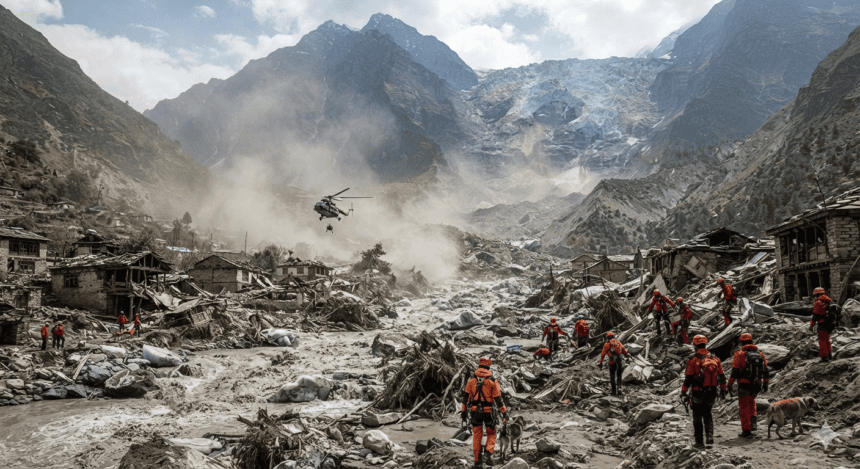
The remote mountain pass of Zanskar turned into a graveyard Tuesday. A massive section of the glacier broke loose without warning, burying a base camp and several trekking groups under millions of tons of ice and debris.
Rescue teams have pulled 792 bodies from the slush and jagged rock since the slide began at 4:15 a.m. local time. Local officials expect that number to climb. The sheer scale of the debris field—stretching over three kilometers—has forced authorities to shift from a rescue operation to a recovery mission.
“We aren’t looking for survivors anymore,” said District Magistrate Tenzin Dorje, his voice strained as he spoke to reporters near the site. “The window for survival in these temperatures closed hours ago. Now, we are simply trying to bring them home.”
The collapse wasn’t entirely unexpected by those who monitor the region’s climate. Unusually high temperatures for late spring had weakened the glacier’s base, creating deep fissures that locals had been warning about for weeks. Despite these hazards, the path remained open to commercial expeditions.
The disaster has triggered an immediate outcry regarding the safety of high-altitude tourism. Critics argue that the government prioritized revenue over the obvious signs of environmental instability. With climate change accelerating glacial melt across the Himalayas, experts warn this event may be a precursor to a larger, more volatile era for the mountain range.
For now, the focus is on the logistics of death. Military helicopters are struggling to land in the high-altitude, thin air, and heavy machinery is useless against the frozen mass. Recovery crews are relying on basic tools: shovels, picks, and human labor.
The government has declared three days of national mourning, but for the families gathered at the regional hospital in Leh, the official decree offers little comfort. They are waiting for names to be posted on a whiteboard—a grim tally that is still being written.