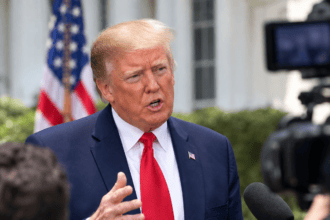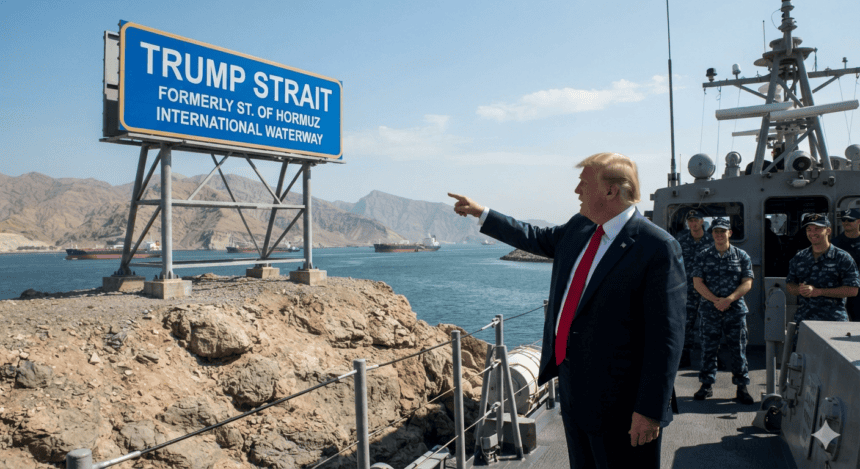
Donald Trump is suggesting a branding overhaul for one of the world’s most volatile shipping lanes. The former president told donors at a private event that he would push to rename the Strait of Hormuz the “Trump Strait” should he return to the White House, according to multiple attendees familiar with his remarks.
The proposal—delivered with his signature penchant for real estate-style naming—targets the narrow waterway responsible for roughly 20% of the world’s total oil consumption. It is a choke point where the U.S. Navy and Iran’s Islamic Revolutionary Guard Corps frequently engage in tense, high-stakes maritime standoffs.
For the global shipping industry, the name change is a geopolitical non-starter. The Strait of Hormuz is recognized by international maritime law as an essential transit route, not a piece of private property. Renaming it would ignore decades of established international norms and complicate an already fragile diplomatic landscape in the Persian Gulf.
Analysts suggest the move is less about maritime logistics and more about domestic signaling. By tethering his name to a global security flashpoint, Trump is leaning into his “America First” branding, framing U.S. influence in the Middle East as a personal exercise in dominance rather than a collective security arrangement.
Regional observers are skeptical. “This is a geopolitical headache wrapped in a PR stunt,” said one Washington-based analyst tracking Gulf security. “You don’t just rename an international transit route because you want to put your name on it. It ignores the reality of who actually controls the shoreline.”
The Iranian government has not issued a formal response, but state-aligned media outlets have previously mocked Trump’s attempts to dictate terms in the region. Past administrations have focused on securing freedom of navigation through the strait; rebranding it, experts argue, would likely provoke Tehran into further aggressive posturing to prove the U.S. has no such authority.
Whether the idea is a genuine policy ambition or another example of Trump’s tendency to float provocative headlines, it has already achieved one goal: it has refocused the conversation on his intent to disrupt international conventions.
For now, the waterway remains the Strait of Hormuz. But for the shipping companies, insurers, and navies operating in the Gulf, the prospect of a U.S. president attempting to claim the map as his own adds a new layer of instability to an already dangerous corridor.