Google Messages is rolling out a new feature that embeds “Content Credentials” into images shared through the app, a move aimed at tracking whether a photo has been altered by generative AI.
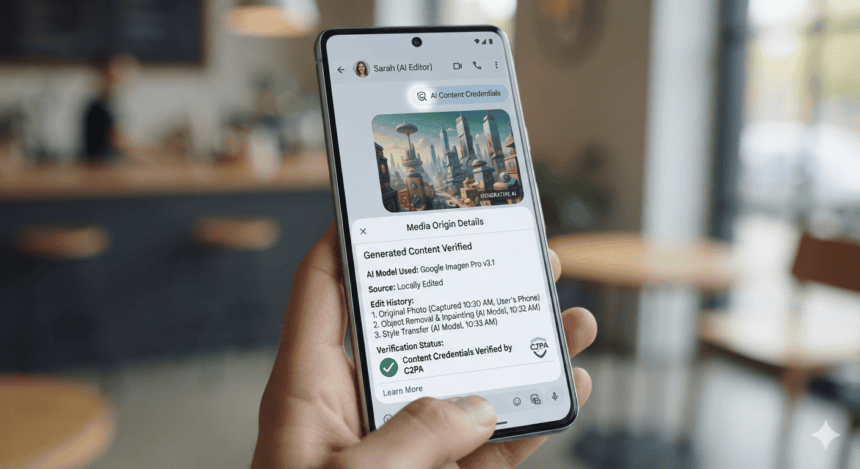
The update, spotted in the latest beta version of the app, adds metadata to images shared via Rich Communication Services (RCS). When a user sends a file created or edited by tools like Magic Editor or Magic Eraser, Google will now attach a C2PA-compliant manifest. This digital watermark effectively acts as a “nutrition label” for the image, detailing the software used to create or modify it.
This shift isn’t just about transparency for the sake of it. As AI-generated content becomes indistinguishable from reality, the risk of misinformation has surged. By baking this data into the file itself, Google is attempting to provide a verifiable history for media, making it harder for users to pass off synthetic edits as raw, unvarnished reality.
For the average user, the change will be subtle. You won’t see a giant watermark splashed across your chats. Instead, the metadata stays hidden in the file’s code, accessible to platforms that support the C2PA standard. If you open a photo in an app that recognizes these credentials, you’ll see exactly what was changed and which AI model did the heavy lifting.
This move aligns Google with a broader industry push—led by the Coalition for Content Provenance and Authenticity—to establish a global standard for digital media transparency. Adobe, Microsoft, and OpenAI have already adopted similar practices, but Google’s integration into its default messaging app marks a significant step toward making these “labels” a standard expectation for mobile users.
The feature is currently limited to specific devices and beta testers, with a wider rollout expected in the coming months. It remains to be seen how effectively this will combat deepfakes, as the system relies on the assumption that users aren’t stripping metadata before sharing.
For now, your phone is about to start keeping a much closer eye on what’s real and what’s been “improved” by algorithms.