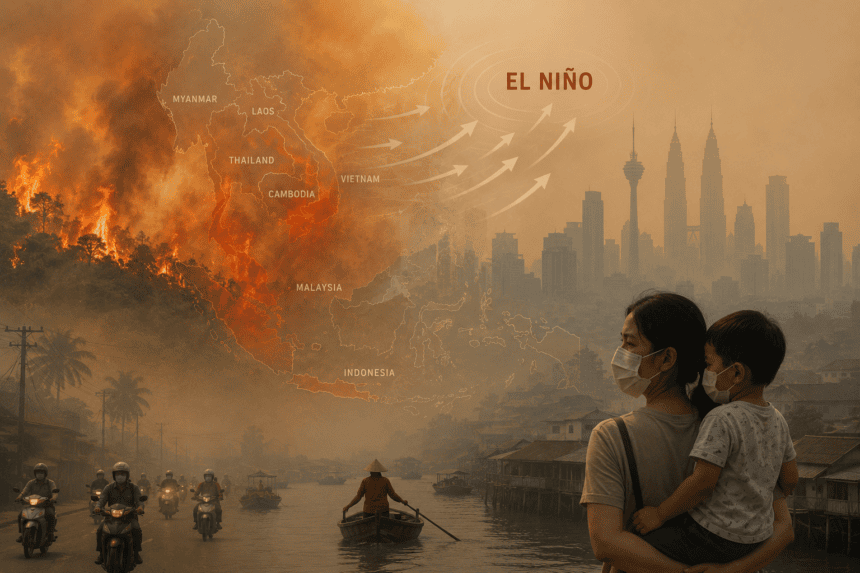
SINGAPORE — A thick, acrid haze is blanketing Southeast Asia, forcing schools to close and health warnings to spike as the region grapples with the fallout of an intensifying “super” El Niño.
Air quality indices in parts of Indonesia, Malaysia, and Singapore have slipped into the “unhealthy” range this week. The culprit isn’t just the wind; it’s thousands of hectares of peatland currently burning in Kalimantan and Sumatra. These fires, often ignited for palm oil and pulp production, are spreading at an uncontrollable rate as the El Niño cycle dries out the forest floor.
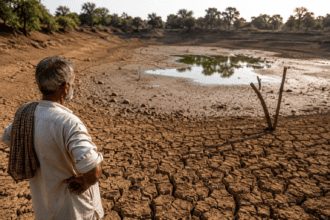
The climate phenomenon is effectively starving the region of rain. Without the usual monsoon moisture to dampen the landscape, the peat fires—which can smolder underground for weeks—are proving nearly impossible to contain.
Public health officials in Kuala Lumpur and Pontianak have urged residents to stay indoors. Hospitals are reporting a surge in patients suffering from acute respiratory infections, particularly among children and the elderly.
“We are seeing a repeat of the 2015 catastrophe,” said one regional climate analyst based in Jakarta. “The difference this time is that the El Niño is stronger, and the forest management systems are still failing to stop the initial ignition points.”
Governments are scrambling to respond. Indonesia has deployed water-bombing helicopters, but officials admit the current dry conditions make the fires resistant to conventional suppression tactics. Meanwhile, regional diplomatic tensions are simmering. Singaporean and Malaysian officials have repeatedly pressed Jakarta for more aggressive action against the plantation companies responsible for the land clearing, citing the “transboundary haze” that ignores international borders.
The economic cost is mounting alongside the health crisis. Beyond the immediate strain on medical services, the haze is disrupting supply chains and curbing tourism across the region.
The immediate forecast offers little relief. Meteorological agencies across the ASEAN bloc confirm that the El Niño peak is expected to last through the next two months. Until the seasonal rains finally arrive, the region remains trapped in a cycle of smoke, heat, and political finger-pointing.