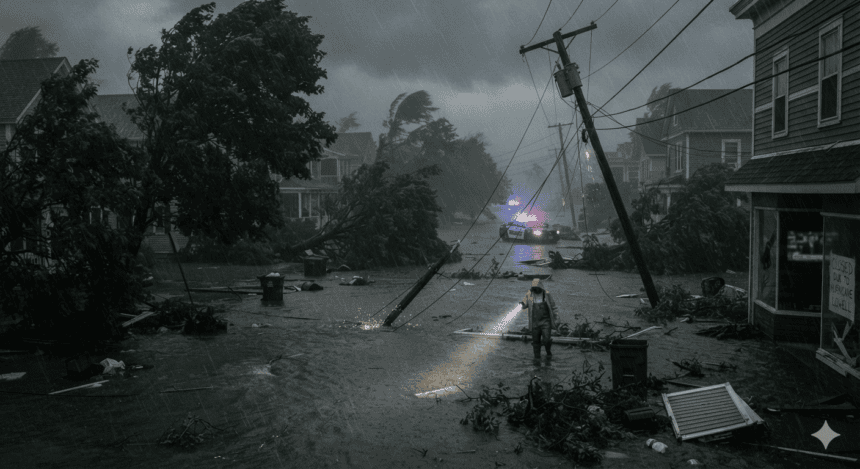
Hurricane Lowell slammed into the coast early Tuesday, dumping torrential rain and packing winds that left at least 30,000 homes and businesses in the dark. Utility crews are scrambling to assess the damage, but downed power lines and flooded roads are stalling restoration efforts across the region.
The storm made landfall shortly after 4:00 a.m., with sustained winds hitting 85 mph. By daybreak, the sheer volume of debris—mostly snapped pine trees and fallen branches—had blocked major arterial routes, effectively cutting off several rural communities from emergency services.
“We’re looking at a long road ahead,” said Maria Santos, a regional spokesperson for the power grid. “The grid infrastructure took a direct hit. Until the wind speeds drop enough for our bucket trucks to go up, most of these outages will remain active.”
The human toll is mounting as the local hospital reported a surge in minor injuries related to storm debris and power generator mishaps. While no fatalities have been confirmed, emergency management officials warned residents to stay off the roads. Flash flooding remains the primary concern as the storm’s outer bands linger over the saturated landscape.
For those in the dark, the reality is a waiting game. Local shelters have opened their doors, but many residents are choosing to stay put, hoping the grid stabilizes before nightfall. The National Weather Service expects the rain to taper off by late evening, but the cleanup—and the wait for the lights to come back on—will likely stretch into the weekend.
The storm’s path is now shifting inland, weakening slightly as it moves, but officials are urging those in the projected track to keep their emergency kits ready. The recovery won’t be quick, and for the 30,000 currently without electricity, the hardest part of the storm is just beginning.