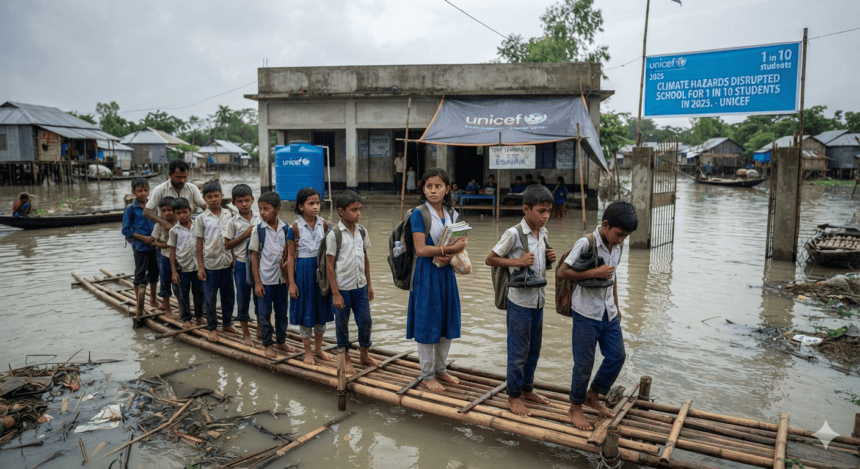
Last year, one out of every ten students globally missed school due to climate-related hazards. UNICEF’s latest data paints a grim picture: extreme weather isn’t just damaging infrastructure—it’s systematically dismantling education for the world’s most vulnerable children.
The agency tracked a massive surge in school closures caused by heatwaves, floods, and cyclones. While governments often treat these events as temporary interruptions, the reality for millions is far more permanent. A week of missed classes here, a destroyed building there—it adds up to a generation falling behind in real-time.
It’s not just about lost days. When schools shutter, the safety net disappears. For many children, the classroom is the only place they receive a consistent meal or protection from child labor and early marriage. Once the doors lock, those risks skyrocket.
UNICEF’s report highlights a widening divide. Students in low-income, climate-vulnerable regions are hit hardest, and they’re the least equipped to recover. Wealthier districts might pivot to remote learning or rapid reconstruction; in many parts of the Global South, a flooded school simply means the end of the academic year.
The economic fallout is massive. Economists warn that these gaps in education create a “lost decade” for human capital. Children out of school today are the workforce of tomorrow, and their lack of consistent learning will ripple through national economies for decades.
Climate adaptation funding has historically ignored education. Most investment flows into hard infrastructure like sea walls or power grids. UNICEF is pushing for a shift: treat schools as essential climate infrastructure. That means building heat-resistant classrooms and creating flexible curricula that can survive the next displacement event.
The data serves as a sharp reminder that climate change is already an education crisis. We aren’t waiting for a future disaster; the classroom of 2025 is already empty.