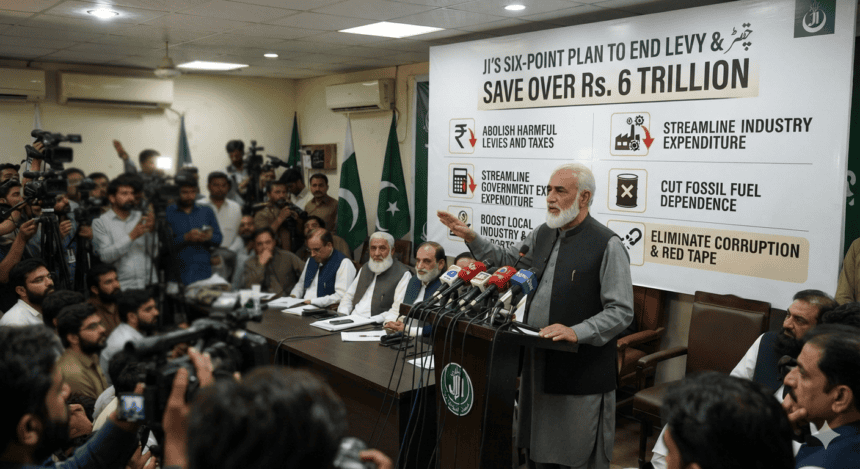
ISLAMABAD — Jamaat-e-Islami (JI) chief Hafiz Naeemur Rehman has presented a six-point economic roadmap, claiming the state can save over Rs6 trillion annually by cutting bureaucratic waste and reforming the tax structure. The plan, unveiled at a press conference on Wednesday, targets the lifestyle of the ruling elite rather than the pockets of the working class.
The JI’s proposal centers on the immediate abolition of the controversial Independent Power Producer (IPP) contracts. Rehman argues these agreements—which guarantee capacity payments to private power firms regardless of consumption—are the single largest drain on the national exchequer. By renegotiating or canceling these deals, the party insists the government could provide instant relief to electricity consumers.
The plan also calls for a drastic reduction in the “protocol culture” and perks afforded to government officials. Rehman pointed to the massive fuel and vehicle budgets allocated to ministers and bureaucrats, characterizing them as a betrayal of a public currently reeling from record-high inflation.
“The government keeps asking the poor to tighten their belts, yet the elite continues to live in luxury at the taxpayers’ expense,” Rehman told reporters. He challenged the federal cabinet to lead by example, suggesting that if the leadership adopts an austerity model, the public would be more willing to endure necessary fiscal adjustments.
Beyond administrative cuts, the JI roadmap demands a complete overhaul of the tax system. The party is pushing for a move away from indirect taxes—which hit the poor hardest—toward a system that captures untaxed income from the real estate, retail, and agricultural sectors. Rehman warned that the current reliance on “mini-budgets” and IMF-mandated tax hikes is pushing the middle class to the brink of collapse.
Financial analysts remain skeptical about the feasibility of a Rs6 trillion saving, noting that structural reforms in the power sector often invite legal challenges from international investors. However, the JI has signaled it will take the protest to the streets if the government refuses to audit the IPP contracts and reform the bureaucratic spending machine.
With public frustration mounting over rising utility bills, this plan provides a populist platform that the government will find difficult to ignore. Whether the administration chooses to engage with these proposals or dismisses them as political rhetoric, the pressure for a shift in economic policy is only intensifying.