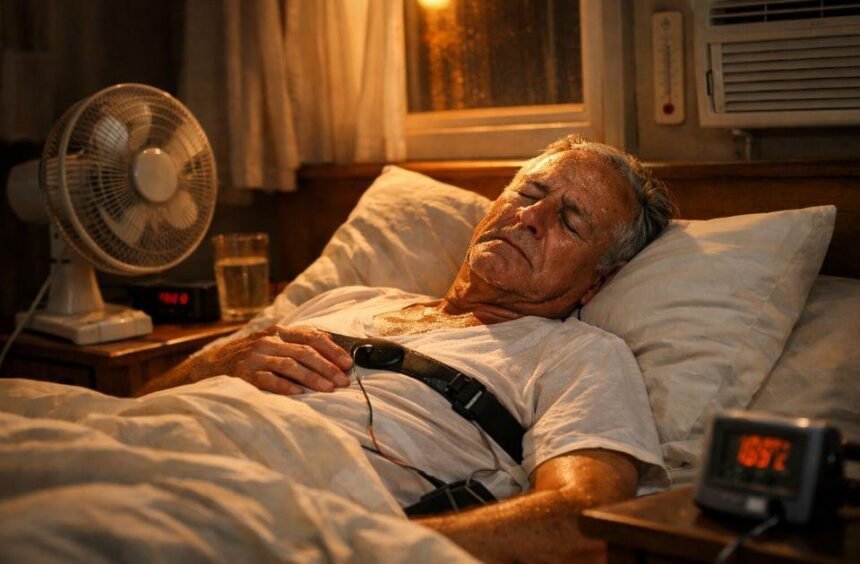
A bedroom that feels slightly too warm may seem like nothing more than a comfort issue. However, excessive nighttime heat can interfere with the body’s ability to cool itself and may place additional stress on the cardiovascular system.
During sleep, the body naturally undergoes changes in temperature and circulation. A very warm environment can interfere with this process and make it harder to achieve restful sleep.
How does heat affect the heart?
When the body becomes too warm, it increases blood flow toward the skin to help release heat. The heart may then have to work harder to circulate blood.
Heat can also increase sweating and fluid loss. If a person becomes dehydrated, blood volume can fall and the cardiovascular system may face additional stress.
Hot temperatures can disrupt sleep
One of the most noticeable effects of a hot bedroom is poor sleep. You may struggle to fall asleep, wake up repeatedly or feel uncomfortable throughout the night.
Repeated sleep disruption can affect mood, concentration and daytime energy. Poor sleep over the long term is also associated with several cardiovascular and metabolic health concerns.
Who should be especially careful?
Older adults and people with cardiovascular conditions may be more vulnerable to extreme heat. People taking certain medications may also have a reduced ability to regulate body temperature.
During heatwaves, keeping the sleeping environment comfortable becomes especially important.
How can you keep your bedroom cooler?
Simple steps can make a difference. Keep curtains or blinds closed during the hottest part of the day, improve ventilation when outdoor conditions allow and use a fan or air conditioner when appropriate.
Lightweight bedding and breathable sleepwear can also help. Staying hydrated throughout the day is important, particularly during hot weather.
The bottom line
A hot bedroom can interfere with sleep and increase the physical effort required to regulate body temperature. While bedroom temperature is only one part of cardiovascular health, maintaining a comfortable sleeping environment is a sensible habit.
If you have heart disease, high blood pressure or another cardiovascular condition, take extreme heat seriously and seek medical advice if you experience concerning symptoms such as chest pain, severe weakness, confusion or difficulty breathing.