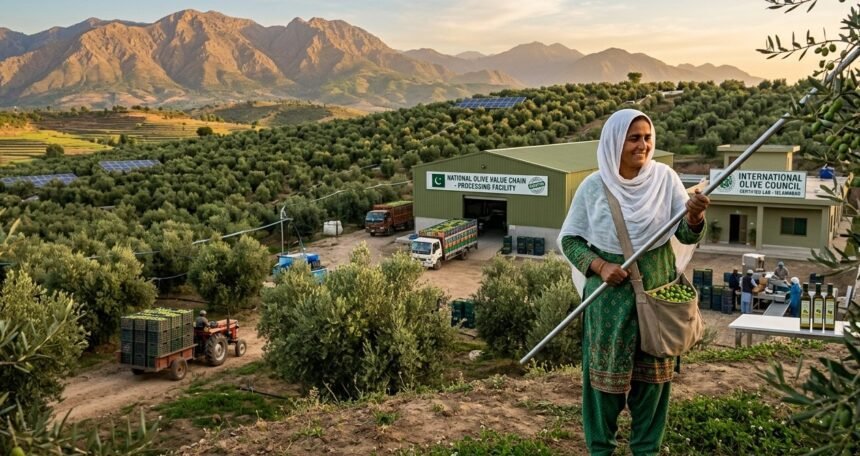
ISLAMABAD: Pakistan has stepped up efforts to develop a comprehensive national olive value chain, aiming to bring greater coordination to olive cultivation, processing, quality control, branding and marketing across the country. The initiative is being reviewed at the federal level as part of broader efforts to transform olive production into a commercially viable agricultural sector.
Federal Minister for National Food Security and Research Rana Tanveer Hussain chaired a meeting with the OliveCulture Project team on September 15, where officials reviewed progress on the project and discussed measures for developing a comprehensive national olive value chain.
The proposed approach seeks to connect different stages of the industry, from olive farming and harvesting to processing, packaging, quality assurance, marketing, and final consumption. Officials and sector stakeholders believe that better integration could help farmers obtain greater value from their produce while improving the quality and competitiveness of Pakistani olive products.
The initiative also focuses on strengthening institutional and technical capacity. The OliveCulture programme describes its objective as creating a coordinated, farm-to-fork system involving government institutions, businesses, farmers, researchers, women, youth and consumers.
Pakistan has significant potential for expanding olive cultivation, particularly in areas suited to the crop. Developing domestic processing and marketing capacity could help reduce dependence on imported edible oils while creating new opportunities for rural employment, entrepreneurship and value-added agricultural exports.
Quality standards are another key component of the proposed value chain. Better testing, processing practices, packaging and certification could help Pakistani olive oil and related products compete in domestic and international markets. The national framework is also expected to encourage investment in modern processing facilities and improve coordination between producers and markets.
The government’s push comes as the olive sector gains greater attention as a potential source of agricultural diversification, rural income and climate-resilient farming. The OliveCulture programme has emphasized climate-smart cultivation and the involvement of women and young people in the emerging industry.
A coordinated national strategy could ultimately help Pakistan move from fragmented olive production toward a more organized and commercially sustainable industry, with benefits extending from farmers and processors to consumers and exporters.