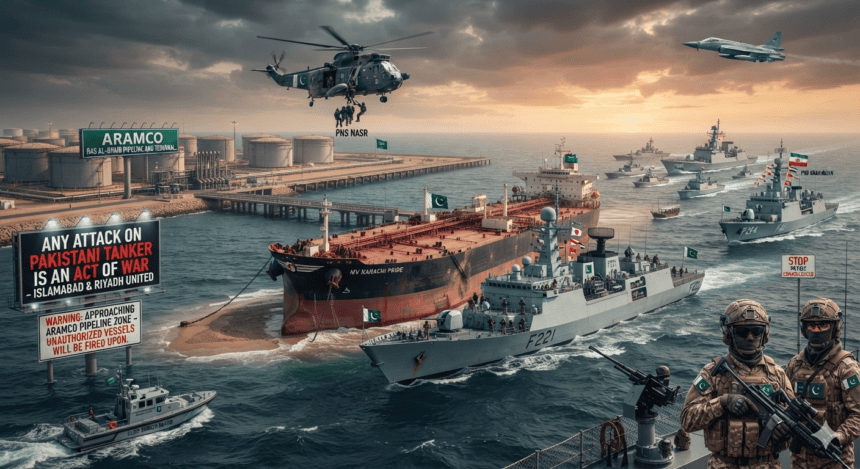
ISLAMABAD — The Pakistani government issued a stark warning Thursday: any strike on the oil tanker currently disabled near the Saudi pipeline corridor will be treated as an act of war.
The vessel, carrying a critical shipment of crude, has been stalled for 48 hours following a mechanical failure. It sits in a high-tension maritime zone where regional volatility remains at a peak. Officials in Islamabad made clear that the tanker’s security is now a national priority, regardless of the vessel’s final flag or ownership.
“We aren’t looking for a fight, but we won’t stand by while our energy security is put at risk,” a senior official in the Ministry of Foreign Affairs told reporters. “Any aggression toward that vessel will be met with a direct and proportionate response. It’s an act of war, plain and simple.”
The tanker’s proximity to the Saudi pipeline infrastructure adds a layer of geopolitical risk. Analysts suggest the vessel’s presence has turned it into a potential flashpoint for regional proxy actors. Should an attack occur, the ripple effects would hit Pakistan’s already fragile energy grid, which relies heavily on these maritime corridors for fuel imports.
The military has reportedly moved naval assets closer to the sector to monitor the situation. While the government hasn’t confirmed the specific deployment, the shift in rhetoric signals a departure from the usual diplomatic caution.
Regional observers note the timing is particularly sensitive. With tensions simmering across the Gulf, the government in Islamabad is signaling that it will no longer treat threats to its supply chain as purely commercial disputes.
For now, the tanker remains anchored, awaiting technical crews. The crew is safe, and the cargo is secure — for the moment. But the message from Islamabad is clear: the cost of an attack will be far higher than any aggressor might anticipate.