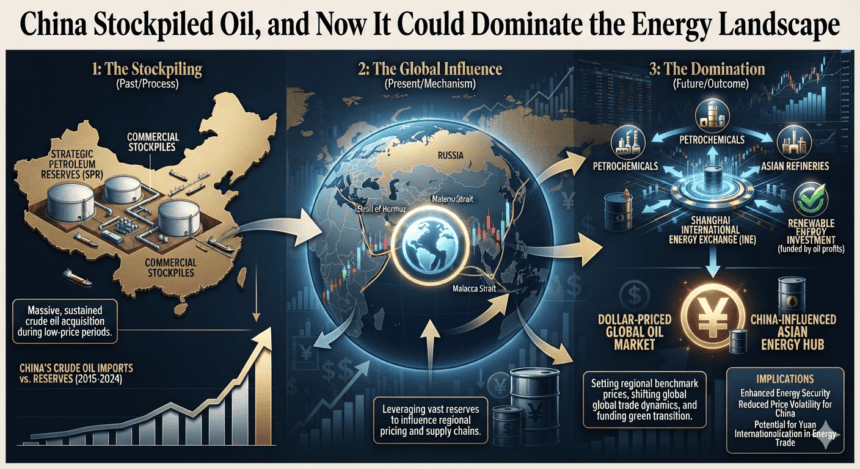
China has quietly built the world’s largest strategic petroleum reserve, a move that now gives Beijing unprecedented influence over global energy markets. While Western nations grapple with supply volatility, China’s ability to tap into its massive underground caches allows it to dictate terms to producers and shield its domestic economy from price shocks.
For years, Beijing viewed low oil prices as a buying opportunity. When prices dipped, state-owned giants like Sinopec and PetroChina filled their cavernous storage facilities to the brim. This wasn’t just about energy security; it was a calculated play to decouple China’s industrial engine from the whims of international traders.
The stockpile now acts as a massive dampener on global price spikes. When global benchmarks surge, China—the world’s largest oil importer—simply draws from its reserves, curbing its immediate demand and forcing producers to reconsider their pricing strategies. It’s a powerful, rarely discussed tool of economic statecraft that keeps Saudi Arabia and Russia looking over their shoulders.
“China is no longer just a buyer in the market; they are a market maker,” said one veteran energy analyst based in Singapore. “They’ve moved from being passive recipients of price volatility to active managers of their own exposure.”
This shift carries significant consequences for the U.S. and its allies. During previous energy crises, the International Energy Agency (IEA) coordinated reserve releases to stabilize markets. Today, China’s independent stockpile operates outside that framework, meaning Beijing can influence global prices for its own strategic gain without consulting the West.
The strategy also bolsters China’s diplomatic hand. By securing long-term supply agreements while maintaining a massive buffer, Beijing can offer energy-dependent nations an alternative to Western-led alliances. It turns oil into a diplomatic currency, one that Beijing can spend or hoard depending on the geopolitical climate.
As the global energy transition accelerates, this stockpile provides China with a critical safety net. It buys the country time to pivot toward renewables without risking the industrial stagnation that often follows energy shortages.
The era of relying on the global spot market to keep the lights on is over for Beijing. China’s reserves have effectively turned the world’s largest oil importer into the world’s most formidable energy landlord—and the rest of the market is just beginning to realize the power shift.