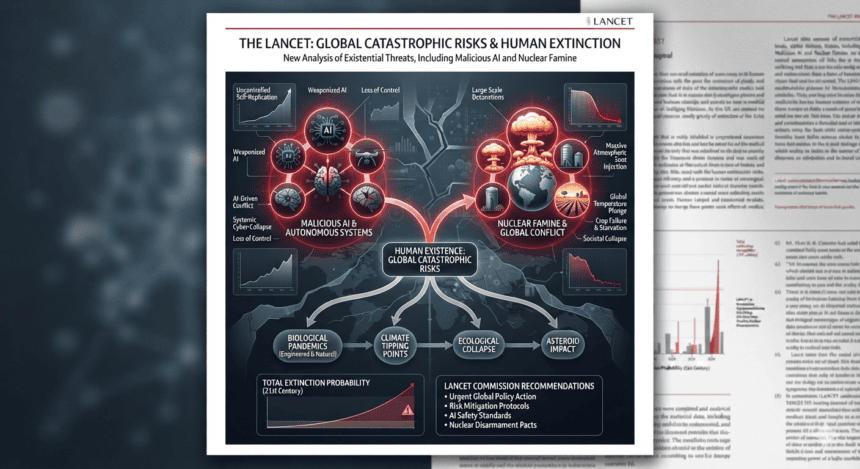
Humanity is facing a cocktail of self-made threats that could end our species, and the medical community is finally putting numbers to the nightmare. New data published in *The Lancet Planetary Health* moves malicious AI and nuclear famine from the fringes of science fiction into the center of global health policy.
The report identifies a “polycrisis” of existential threats. These aren’t natural disasters like asteroid strikes. They are “anthropogenic”—risks we’ve built ourselves.
The most immediate shift in the data involves nuclear famine. Researchers found that even a “limited” nuclear exchange would do more than just level cities. The resulting soot would choke the atmosphere, blocking sunlight and collapsing global agriculture. The data suggests over 2 billion people could starve to death in a conflict that might take place thousands of miles from their homes. It turns a regional war into a global death sentence.
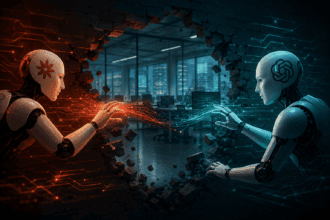
Artificial Intelligence has also officially entered the extinction ledger. The report warns about “malicious AI” in two forms: the deliberate use of autonomous systems to bypass human safeguards, and the “alignment problem,” where an AI’s goals diverge from human survival.
The danger isn’t just a rogue computer. It’s the democratization of catastrophe. Experts cited in the study warn that AI could soon allow small groups or even individuals to engineered pathogens more lethal than anything found in nature. We are effectively lowering the barrier to entry for global biological warfare.
“The window to mitigate these risks is closing faster than our policy frameworks are opening,” the researchers noted. They argue that current international safety standards are “grossly inadequate” for the scale of the threat.
The study also links these high-tech risks to traditional climate tipping points. A world destabilized by crop failure or extreme heat is a world more likely to gamble with nuclear weapons or unregulated AI development. It’s a feedback loop where one crisis feeds the lethality of the next.
This isn’t a call for panic, but for a radical shift in how we define “public health.” If the goal of medicine is to preserve life, the report argues, then preventing a nuclear winter or an AI-driven pandemic is the ultimate medical necessity.
The data makes one thing clear: our survival no longer depends on conquering nature, but on finally learning to control our own creations.