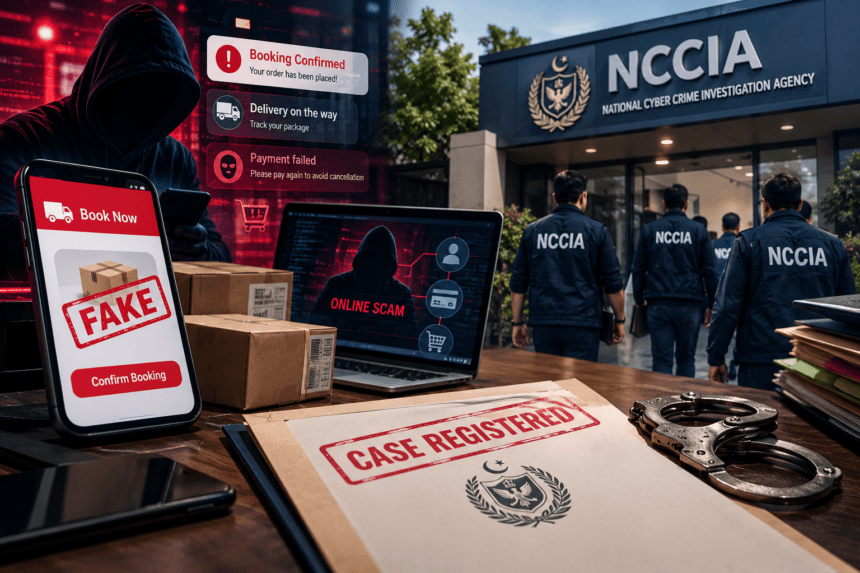
The National Cyber Crime Investigation Agency (NCCIA) has officially registered a criminal case following a sophisticated surge in “fake booking” and fraudulent delivery scams. The investigation centers on syndicates that have been exploiting digital logistics platforms to dupe unsuspecting consumers and local businesses.
The racket operates through a simple but effective deception. Perpetrators create fake vendor profiles on delivery apps, list high-demand electronics or luxury goods at steep discounts, and then process orders that never leave the warehouse. When victims attempt to track their shipments, they are met with fabricated tracking numbers or ghost customer support agents who disappear once payment is processed.
“These aren’t just one-off incidents,” an NCCIA investigator told reporters on the condition of anonymity. “We are looking at organized networks using automated bots to scrape legitimate business data and clone entire storefronts. It’s a level of technical sophistication that makes tracking the money trail difficult.”
The financial fallout is hitting small-scale entrepreneurs hardest. Many local retailers report that their brand names are being hijacked to lend credibility to these phantom stores. When customers are scammed, they naturally turn their anger toward the legitimate business, causing significant reputational damage that takes months—or years—to repair.
NCCIA officials are now working with major delivery platforms to tighten verification protocols. The current system relies heavily on automated onboarding, which the agency says is the primary vulnerability. Investigators are pushing for mandatory biometric or physical address verification for all new vendors, a move that could slow down the rapid expansion of these platforms but significantly reduce fraudulent activity.
For the consumer, the warning is stark: if a deal on a major platform looks too good to be true, it likely is. The agency is urging victims who have lost money to file formal complaints through the national cybercrime portal immediately, rather than waiting for resolution from the delivery app’s internal support chat.
As the investigation widens, the NCCIA expects to make its first round of arrests by the end of the week. The focus remains on the digital infrastructure hosting these fake storefronts—a move the agency hopes will dismantle the network’s ability to operate in the shadows.