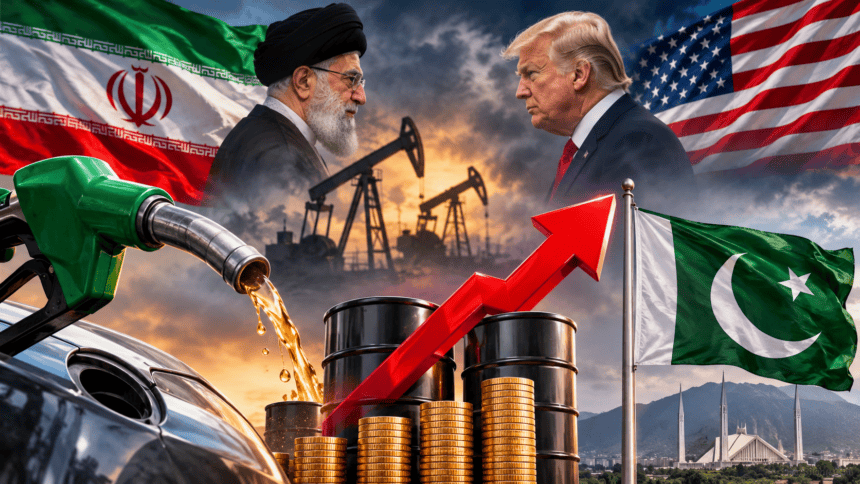
The federal government has quietly overhauled its petroleum pricing mechanism, a move aimed at insulating domestic consumers from the volatility triggered by brewing Iran-US tensions. Finance ministry officials confirmed the adjustment late Tuesday, marking a shift in how the state calculates the base cost of imported fuel.
The revision centers on the “premium” paid for refined petroleum products. By recalibrating the freight and insurance risk margins, the government is attempting to stabilize pump prices before the market reacts to potential supply chain disruptions in the Strait of Hormuz.
For the average citizen, the change is a defensive hedge. With global crude markets jittery over fears of an expanded conflict between Tehran and Washington, the cost of importing refined products into Pakistan has become increasingly unpredictable. The new formula effectively tightens the window on what oil marketing companies can pass on to the consumer, capping potential surges linked to geopolitical risk premiums.
“We are tracking the risk factors hourly,” an official at the Petroleum Division said. He spoke on condition of anonymity, citing the sensitivity of commodity markets. “The goal is to prevent a shock at the pump if shipping insurance rates spike overnight.”
The timing is telling. Pakistan relies heavily on imports to meet its daily fuel requirements, and any escalation in the Middle East directly inflates the national import bill. Last year, similar tensions forced the government to dip into emergency reserves; this time, authorities are prioritizing price-smoothing mechanisms over reactive adjustments.
Economic analysts remain skeptical about the long-term efficacy of these tweaks. While the revised formula might soften the blow of a sudden price hike, it does not address the underlying foreign exchange pressure that continues to devalue the rupee against the dollar.
“Adjusting the formula is a temporary patch,” said an Islamabad-based energy consultant. “If the cost of landing fuel in Karachi rises significantly due to war-risk surcharges, no amount of formula restructuring can keep prices artificially low without ballooning the subsidy deficit.”
For now, the government is betting that a more agile pricing structure will buy enough time to navigate the current regional instability. Whether this internal restructuring holds up against a full-scale market disruption remains the primary concern for the economic team.
The next fortnightly price review, scheduled for the first of the month, will serve as the first real-world test of the new calculation.