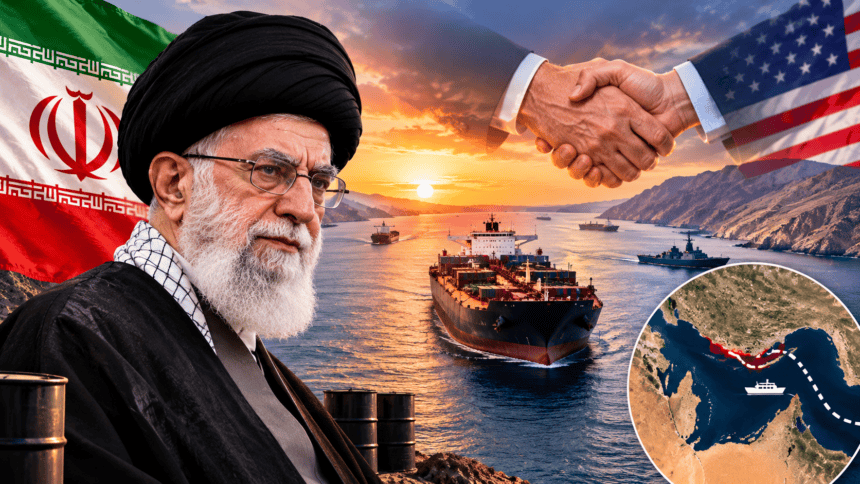
Iran’s top diplomatic envoy has signaled a potential breakthrough in regional maritime security, stating that Tehran would reopen the Strait of Hormuz to global shipping within two days of reaching a comprehensive agreement with the United States.
The commitment, aimed at de-escalating months of rising tensions in the Persian Gulf, hinges on the successful negotiation of a broader bilateral deal. While the Iranian government has frequently used the threat of closing the vital chokepoint as leverage in past disputes, this explicit timeline marks a shift toward leveraging the waterway for diplomatic progress rather than just military posturing.
The Strait of Hormuz remains the world’s most critical oil artery, with roughly 20% of global petroleum consumption passing through its narrow passage daily. Even a brief disruption in traffic has historically sent global oil prices surging, impacting economies from Tokyo to London. By offering a 48-hour window for normalization, Tehran is signaling it is ready to trade its most potent economic weapon for sanctions relief or diplomatic recognition.
Washington has yet to issue a formal response to the proposal. White House officials remain wary of Iranian promises, citing a history of broken agreements and the ongoing activity of the Islamic Revolutionary Guard Corps (IRGC) in harassing commercial vessels. The U.S. Navy maintains a heavy presence in the region specifically to ensure the “free flow of commerce,” a mission that would be complicated by any formal diplomatic reliance on Iranian cooperation.
The proposal comes as Iran faces mounting internal pressure from a struggling economy and a currency that has seen its value plummet against the dollar. Analysts suggest that Tehran’s leadership recognizes that maintaining a permanent state of crisis in the Gulf is no longer sustainable.
However, the path to such a deal is littered with obstacles. Beyond the nuclear file, Washington and its regional allies—particularly Saudi Arabia and the UAE—remain deeply concerned about Iran’s regional proxy network. Any agreement to reopen the Strait would likely require guarantees that go far beyond maritime transit, touching on security architectures that neither side has been willing to compromise on for decades.
For now, the offer stands as a tactical maneuver. Tehran is effectively betting that the global thirst for stable oil prices will force the U.S. to take the bait. Whether Washington views this as a genuine diplomatic opening or a desperate attempt to bypass sanctions remains the central question in a region where talk of “deals” often precedes a return to the status quo.