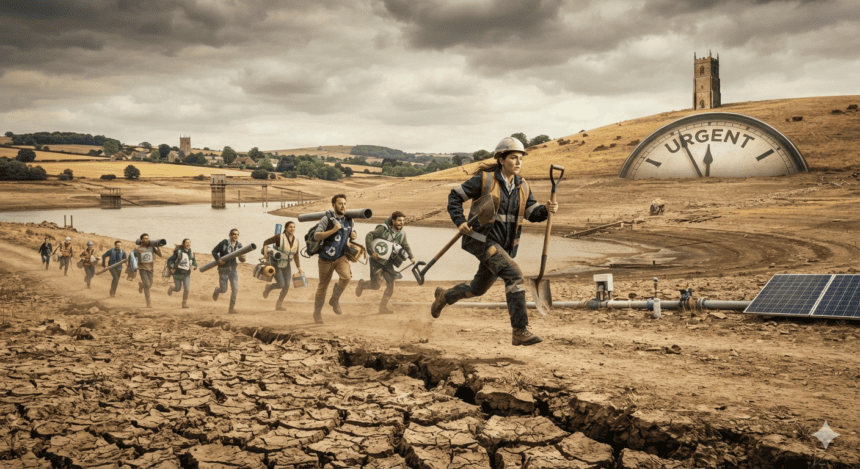
England is sleepwalking into a water shortage that experts warn could see taps running dry for millions within the next 20 years. It isn’t just about a lack of rain; it’s a systemic failure of aging infrastructure, surging demand, and a changing climate that the current network was never built to handle.
The Environment Agency has been blunt: if current trends continue, England will face a supply gap of roughly 4 billion liters of water per day by 2050. Sir James Bevan, the agency’s former chief, famously labeled this the “jaws of death”—the point where the amount of water available falls below the amount needed to meet the needs of people, industry, and the environment.
The math is simple, yet the solutions remain stalled. Population growth and record-breaking heatwaves are putting unprecedented strain on reservoirs that were designed for a different era. Meanwhile, water companies are losing nearly 20% of their supply to leaks before it even reaches a home.
“We are essentially leaking a fifth of our product while demand hits record highs,” says a lead analyst at Water UK. “It’s a business model that wouldn’t survive a day in any other sector, yet here we are.”
The government’s response has focused on mandatory metering and long-term infrastructure projects, such as new reservoirs and desalination plants. However, these are decade-long endeavors. Critics argue that the immediate focus should be on the billions of liters lost to cracked pipes that have been neglected for years.
The financial burden of these upgrades is a point of contention. Water companies are pushing for higher consumer bills to fund the necessary repairs, a hard sell while public anger over sewage spills and executive bonuses remains at an all-time high.
Water scarcity is no longer a theoretical risk for the distant future. In the south and east of England, the stress is already visible in the form of seasonal hosepipe bans and dwindling river levels. These restrictions are a temporary patch on a structural wound.
Without a radical overhaul of how water is managed, transported, and conserved, the “jaws of death” won’t be a metaphor anymore. It will be the reality of a country that took its most basic resource for granted until the well finally ran dry.