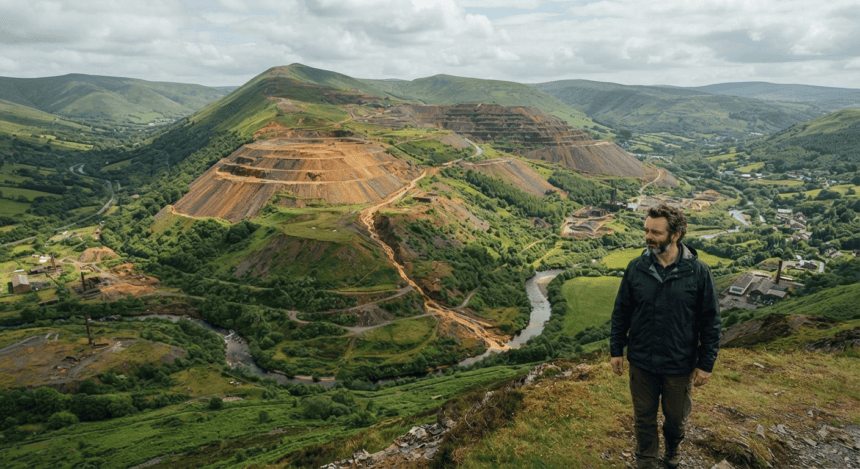
Michael Sheen isn’t just acting anymore; he’s documenting a national trauma. In his latest investigative project, the Welsh actor pulls back the curtain on the environmental and human cost of Wales’ coal mining history—a legacy of toxic waste that continues to plague communities long after the pits have closed.
He describes a moment during his research that hit home—a revelation from a local resident about the extent of the contamination that left him shaken. “What he told me made my blood run cold,” Sheen remarked, pointing to the disconnect between the romanticized history of Welsh industrialism and the reality of the soil people live on today.
The project digs into the “spoil tips”—massive mounds of mining debris that dot the Welsh landscape. While these hills are often viewed as relics of a bygone era, Sheen’s investigation highlights that many remain unstable and potentially hazardous. The 1966 Aberfan disaster, where a collapsing tip buried a primary school and killed 144 people, remains the most tragic example, but the actor argues the danger has shifted from sudden catastrophe to a slow, systemic poisoning.
Local activists have spent years lobbying for comprehensive testing of these sites, but progress remains sluggish. Sheen’s reporting focuses on the bureaucratic inertia that has kept these communities in the dark about the chemical composition of their own backyards. He isn’t interested in a polished documentary; he’s looking for accountability.
The actor’s pivot to investigative work marks a departure from his usual screen roles, but the urgency is palpable. He’s framing the issue not as a historical footnote, but as a modern-day health crisis. For the families living in the shadow of these mounds, the “toxic legacy” isn’t a metaphor—it’s the water they drink and the air they breathe.
Sheen’s investigation leaves viewers with a pointed question: how much longer can a country ignore the waste buried beneath its feet before the cost of silence becomes too high to pay?