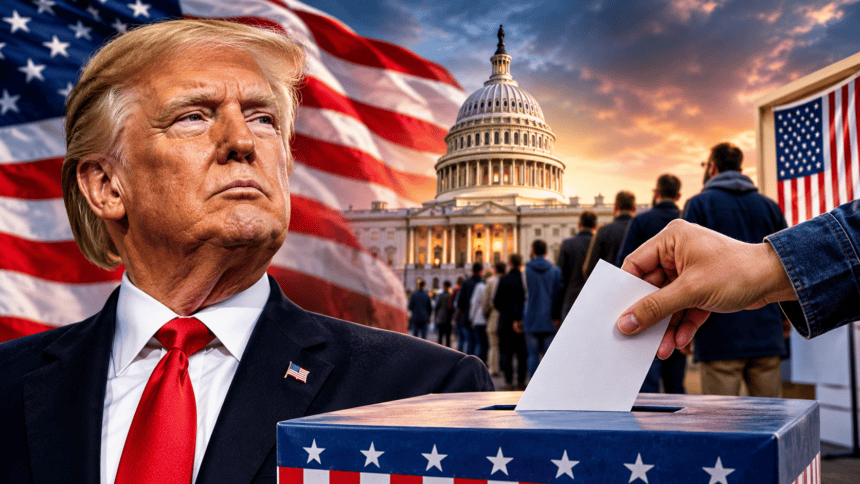
Polls opened across the United States Tuesday morning, launching a midterm election that serves as the ultimate stress test for Donald Trump’s presidency. With control of both chambers of Congress at stake, the results will determine whether the President spends his final two years with a legislative rubber stamp or a wall of Democratic opposition.
Voters are deciding the fate of 435 House seats and 35 Senate contests. Every House seat is on the ballot, but the Senate map is particularly brutal for Democrats, who are defending seats in states Trump carried easily in 2016.
The President has framed this election as a personal mandate. He’s spent the final weeks of the campaign crisscrossing the country, holding rallies that focus less on policy and more on stoking his base against a perceived “left-wing mob.” For Trump, this is about proving his political dominance remains intact despite a flurry of investigations and persistent low approval ratings.
Democrats, conversely, have centered their messaging on healthcare and the protection of the Affordable Care Act. They’ve avoided a nationalized platform, instead allowing candidates to tailor their messages to local concerns—ranging from suburban angst over the President’s rhetoric to rural anxieties about trade tariffs.
Turnout numbers are already shattering records. Early and mail-in voting totals have surged compared to the 2014 midterms, suggesting a highly energized electorate on both sides. In battleground states like Florida, Texas, and Georgia, lines began forming before sunrise.
The stakes are immense. If Republicans hold the House, Trump’s legislative agenda—from tax cuts to border wall funding—gains new momentum. A Democratic flip, however, would trigger a wave of oversight investigations and effectively gridlock the White House.
“This is the most important election of our lifetimes,” said a campaign strategist at the RNC, speaking on condition of anonymity. “The President knows that if we lose the House, the next two years become an endless cycle of subpoenas.”
As ballots are cast, the nation waits to see if the suburban shift toward the Democratic party—a trend that has accelerated throughout the year—will be enough to overcome the structural advantages of the Republican-leaning Senate map. By Wednesday morning, the political landscape of Washington will look very different.