Beijing, June 4, 2025
In a quiet but powerful shift, China is steering the global battery race into a new direction, and the unlikely driver of this change is the humble electric scooter.
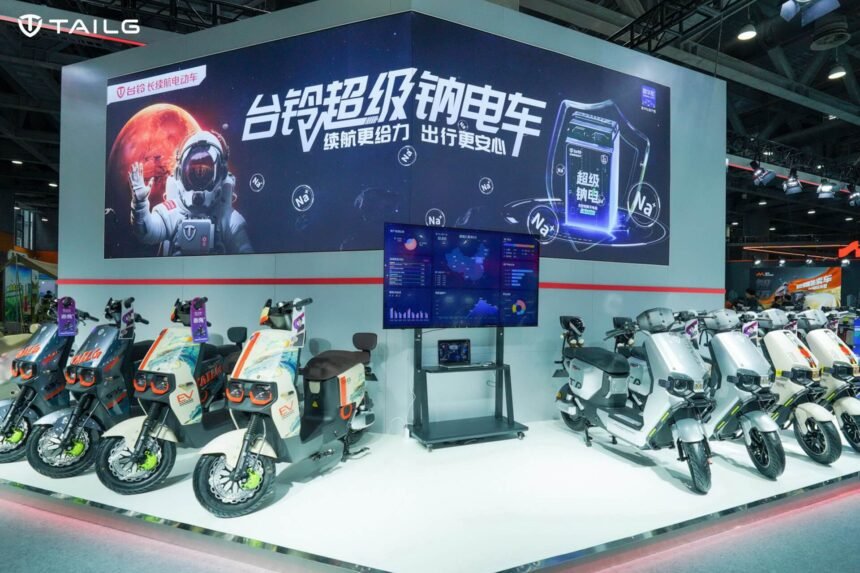
Across cityscapes like Hangzhou and Shenzhen, sleek mopeds zip past traffic with a hidden secret: instead of running on the usual lithium-ion or lead-acid batteries, they are powered by sodium-ion cells, a technology that’s suddenly gaining real-world traction after decades in the shadows.
Why scooters? For one, they don’t need the high energy density required by cars. They typically run short distances at modest speeds, making them ideal candidates for sodium-ion tech—a cheaper, safer, and more abundant alternative to lithium.
“We’re not just selling scooters. We’re building a new battery ecosystem,” said Zhou Chao, senior VP at Yadea, during a CCTV talk show earlier this year. Yadea, China’s leading electric two-wheeler maker, has launched three sodium-ion scooter models so far and is doubling down with a fast-growing network of rapid chargers and battery-swap stations.
Hangzhou now hosts Yadea’s battery-swap stations that let riders exchange a drained battery for a fresh one in under 30 seconds. Meanwhile in Shenzhen, the pilot program with 150,000 food couriers is already proving the tech’s feasibility in real-world, high-demand settings.
At the core of this momentum is sodium’s accessibility. Extracted from sea salt, sodium is about 400 times more abundant than lithium, significantly lowering material costs. And in cold weather, sodium-ion batteries outperform their lithium counterparts—a key factor for northern China.
Even as global lithium prices have cooled from their 2021 peaks, Chinese firms are continuing to invest. CATL, the world’s largest battery maker, plans mass production for heavy-duty sodium batteries under its new brand Naxtra. And state-run utilities are deploying sodium-powered energy storage stations to stabilize renewable grids.
But scooters remain the frontline. Nearly 55 million electric two-wheelers were sold in China in 2023 alone, compared to less than 10 million electric cars. That market scale gives sodium batteries a rare chance to mature through mass adoption.
“It’s a segment where sodium can really shine first,” says Cory Combs, a supply chain expert at Trivium China. While sodium-powered microcars have yet to make a dent, the scooter market is already providing the volume and ecosystem to push the tech forward.
Still, challenges remain. Sodium-ion batteries currently cost about 60% more than lithium for energy storage applications, though that gap is narrowing.