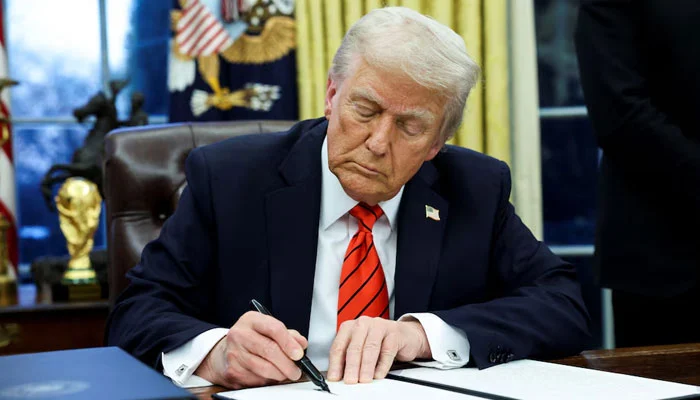
WASHINGTON: U.S. President Donald Trump announced that he has signed letters addressed to 12 countries, informing them of the tariff levels they will face on exports to the United States. The letters — containing “take it or leave it” offers — will be dispatched on Monday, just days before the July 9 negotiation deadline.
Speaking aboard Air Force One en route to New Jersey, Trump declined to name the countries involved, stating the list would be made public on Monday. He emphasized that tariffs could climb to as high as 70% starting August 1, if no agreements are reached.
“I signed some letters and they’ll go out on Monday — probably twelve. Different amounts of money, different amounts of tariffs,” Trump said.
Initially, the White House had planned to send the letters on Friday, but the move was postponed due to the U.S. national holiday.
Shift from Negotiations to Direct Action
Trump’s move marks a significant shift from earlier plans that involved direct negotiations with numerous countries. Frustrated by delayed talks and limited progress, particularly with Japan and the European Union, the administration now favors a more aggressive, unilateral approach.
“Letters are better — much easier to send a letter,” Trump remarked, showing his preference for written ultimatums over prolonged diplomatic talks.
Countdown to Deadline
Back in April, Trump announced a 10% base tariff on imported goods, with possible increases up to 50% for countries that did not cooperate. However, these additional tariffs were temporarily suspended for 90 days, providing a window for trade negotiations — a period set to end on July 9.
Now, the White House warns that without firm agreements, tariffs could soar up to 70% from August 1, impacting key global exporters.
Status of Trade Deals So Far
So far, two countries have successfully negotiated trade agreements:
-
United Kingdom: Retained the 10% base rate with preferential terms for sectors like automobiles and aircraft engines.
-
Vietnam: Avoided the 46% threat and settled for 20% tariffs, while gaining duty-free access for many U.S. exports.
On the other hand, anticipated deals with India and the EU have stalled. EU diplomats stated they may now opt to extend current agreements to avoid sudden tariff increases.