
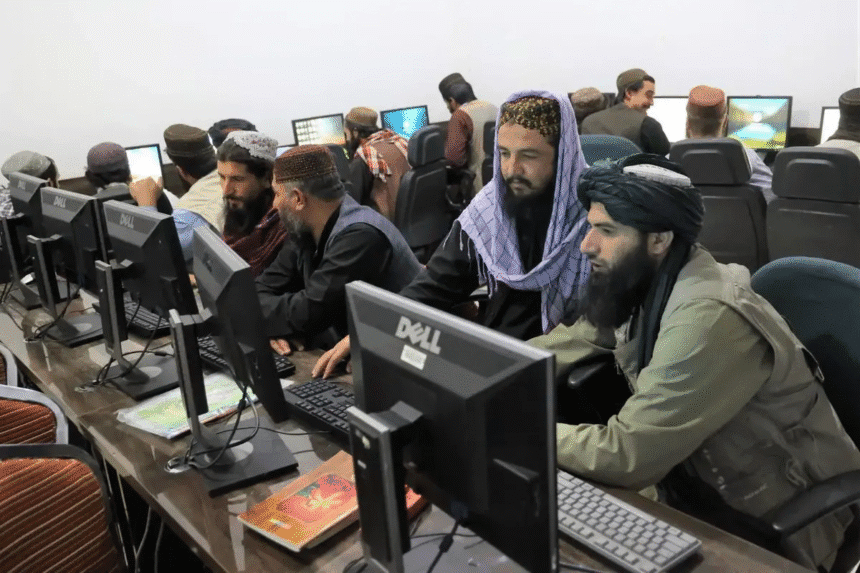
Afghanistan has been cut off from the outside world after the Taliban ordered a nationwide shutdown of telecommunications and internet services, internet watchdog Net Blocks confirmed on Monday.
The blackout described as the worst since the Taliban seized power in 2021 has left millions of Afghans without access to mobile phones, fibre-optic internet, or even satellite television. AFP said it lost all contact with its Kabul office, while reports also confirmed disruption to flights from Kabul airport.
Witnesses in Kabul told the BBC that connections began failing around 5 p.m. local time (12:30 GMT), with many residents expected to realize the full impact only on Tuesday when banks, businesses, and schools attempt to resume operations.
For weeks, Afghans across several provinces had complained of slow or missing connections as authorities gradually severed fibre-optic cables, which carry most of the country’s internet traffic. The Taliban said they were taking such steps to curb what they label “immorality,” though no details have been given about promised alternative internet routes.
Business leaders have warned the shutdown could paralyze the economy, while journalists and activists say it is cutting off one of the last windows for free expression. Hamid Haidari, former editor-in-chief of 1TV, said the country now feels “wrapped in loneliness” and compared Afghanistan to North Korea for its disconnection from the world.
This blackout is only the latest in a string of restrictions. The Taliban recently removed books written by women from universities, banned courses on human rights and sexual harassment, and barred girls from studying beyond the age of 12. Midwifery programs the last professional option for women were quietly shut down late last year.
The Taliban, a hardline Islamist group, regained control of Afghanistan in 2021 after a rapid 10-day offensive. Since then, life for Afghans especially women has become increasingly restricted, and now, even their digital lifeline has gone dark.