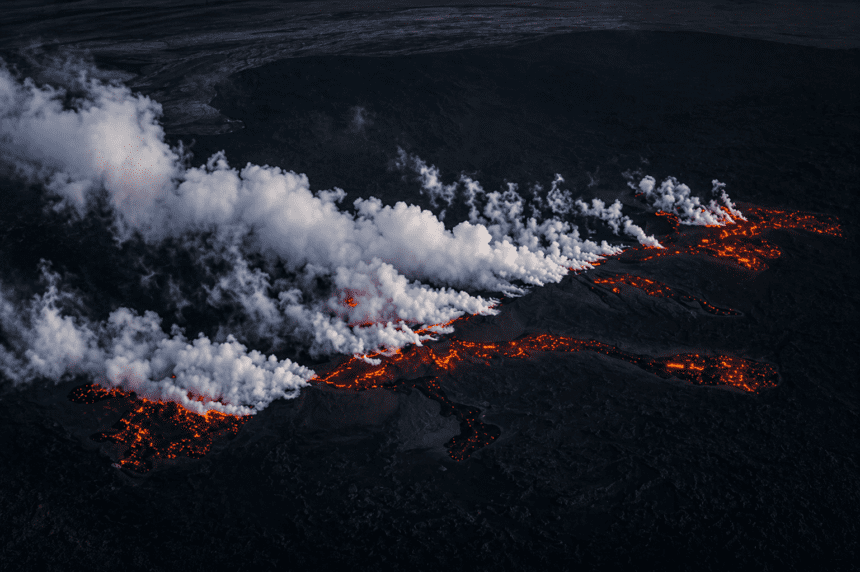
A burst of volcanic activity high in the Andes may have done far more than blanket parts of South America in ash. According to a newly published study, those eruptions likely sent iron-, phosphorus- and silicon-rich ash into the Southern Ocean during the Late Miocene, roughly 8 million to 4 million years ago, fertilizing marine waters, boosting biological productivity and helping pull carbon dioxide out of the atmosphere. Researchers say that chain reaction may have contributed to global cooling and major marine ecosystem changes.
The study, published last week in Communications Earth & Environment, brings together paleontological and geochemical evidence with ash-dispersion modeling and Earth system simulations. The authors argue that explosive volcanism in the Central Andes, especially in the Altiplano-Puna Volcanic Complex, peaked during the Late Miocene and created a long-running pipeline of nutrients to the Southern Ocean. In plain terms, the ash did not just fall and disappear. It appears to have fed ocean life.
That matters because parts of the Southern Ocean are often short on iron, a key nutrient for phytoplankton growth. When ash supplied that missing ingredient, marine productivity rose sharply, the researchers found. More plankton growth meant more carbon was captured from the atmosphere and exported into the deep ocean, a process that can influence climate over long stretches of time. The University of Wyoming, which highlighted the paper this week, said the resulting biological boom likely helped drive a drawdown in atmospheric carbon dioxide and global cooling.
There is also a striking ecological angle. The University of Arizona, whose researchers led the work, said the findings may help explain a wave of dramatic changes in marine ecosystems between about 5 million and 8 million years ago, including unusual whale mortality events and a broader reorganization of ocean food webs. The idea is not that volcanoes directly killed whales in some simple, one-step way. It is messier than that. The eruptions may have triggered nutrient surges, algal blooms and ecosystem disruptions that rippled through the marine environment.
One of the more interesting parts of the study is that the effect seems to depend not only on how big the eruptions were, but how often they happened. Modeling described in coverage of the paper suggests repeated eruptions, spaced over time, could keep feeding the ocean and make the carbon drawdown more durable than a single isolated event would. That gives the study a broader climate significance: it points to volcanism as a possible long-term climate driver in ways that go beyond the usual short-lived cooling seen after modern eruptions.
Researchers are careful, though, not to oversell it. The paper presents a strong case for an overlooked link between Andean volcanism, ocean fertilization and climate, but it is still reconstructing events that unfolded millions of years ago. Those reconstructions rely on models, fossil records and geochemical signals rather than direct observation. Even so, the consistency across those lines of evidence makes the argument hard to shrug off.
The bigger takeaway is a little surprising. Volcanoes are often framed as agents of destruction, and of course they are. But in this case, ancient eruptions may also have acted as nutrient delivery systems, helping transform the chemistry and biology of a vast ocean region and, in the process, nudging Earth’s climate. It’s a reminder that the planet’s major turning points usually aren’t driven by one neat cause. They tend to come from tangled systems colliding — geology, oceans, atmosphere, life — all at once.