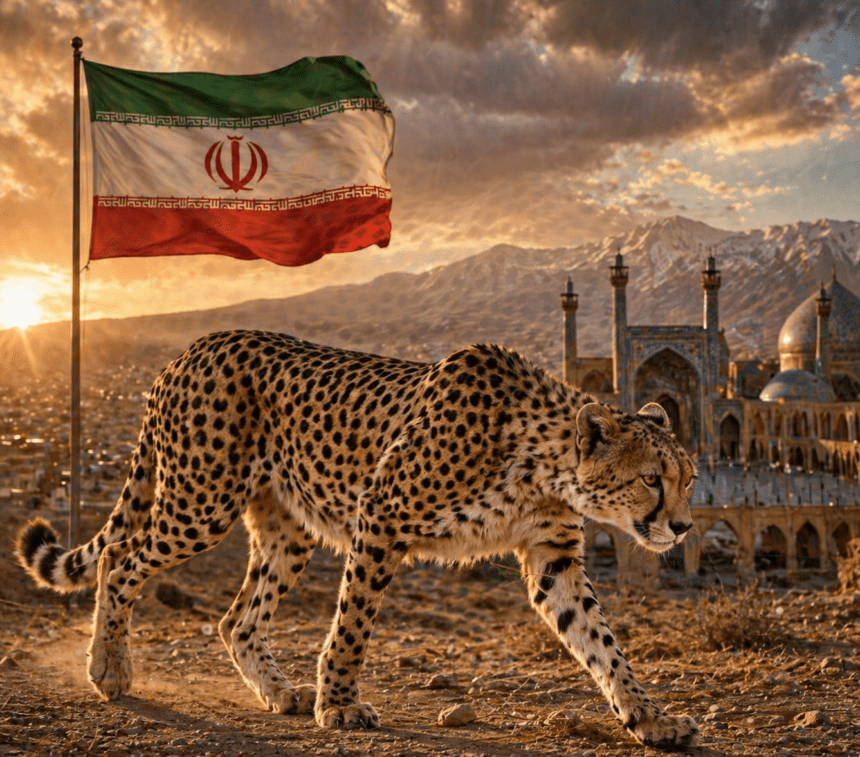
TEHRAN — Deep in the rugged, arid expanses of Iran’s central plateau, camera traps have captured a rare, fleeting image: the Asiatic cheetah. For conservationists, the sighting is more than just a biological victory; it’s a fragile glimmer of optimism in a country increasingly consumed by the shadow of regional military escalation.
The Asiatic cheetah, a distinct subspecies that once roamed from the Mediterranean to the Indian subcontinent, is now confined to a handful of protected pockets in Iran. With fewer than 20 individuals estimated to remain in the wild, every new sighting is a high-stakes event. These cats are currently battling a trifecta of extinction threats: habitat fragmentation, a dwindling prey base, and the unpredictable impact of human encroachment.
But today, the challenge is compounded by the geopolitical climate. As Iran pivots its resources toward defense and regional posturing, environmental funding has effectively hit a wall. Wildlife corridors that require strict protection are often prioritized behind security infrastructure, leaving the cheetah’s narrow range increasingly vulnerable to industrial development and unchecked mining activities.
“We are tracking ghosts,” says a Tehran-based biologist who requested anonymity due to the sensitivity of environmental reporting in Iran. “The government views the cheetah as a symbol of national pride, yet they offer it almost no lifeline in terms of budget or land protection. It’s a performative conservation strategy.”
The recent images, released by local environmental NGOs, show a healthy adult male traversing the Turan Biosphere Reserve. It’s a rare sign of resilience. Yet, conservationists warn that one sighting doesn’t signify a population recovery. The species remains trapped in a genetic bottleneck, with inbreeding threatening their long-term viability even if the habitat were perfectly managed.
The disconnect between state rhetoric and the reality on the ground is sharp. While Iranian officials frequently laud the “Iranian Cheetah” in state media as an icon of resilience, the Ministry of Environment has struggled to maintain the fencing and anti-poaching patrols necessary to keep the cats safe. The ongoing economic strain, exacerbated by international sanctions and the cost of regional conflicts, means that environmental protection has essentially been sidelined.
For a species on the absolute precipice of extinction, the irony is visceral: the cheetah survives in the very landscapes that the state is currently fortifying for conflict. Whether these animals can outlast the human turmoil surrounding them remains the primary question for the researchers monitoring their every move.
Until the state prioritizes the preservation of these corridors over the demands of a wartime economy, the Asiatic cheetah will remain a symbol of what Iran is on the verge of losing forever.