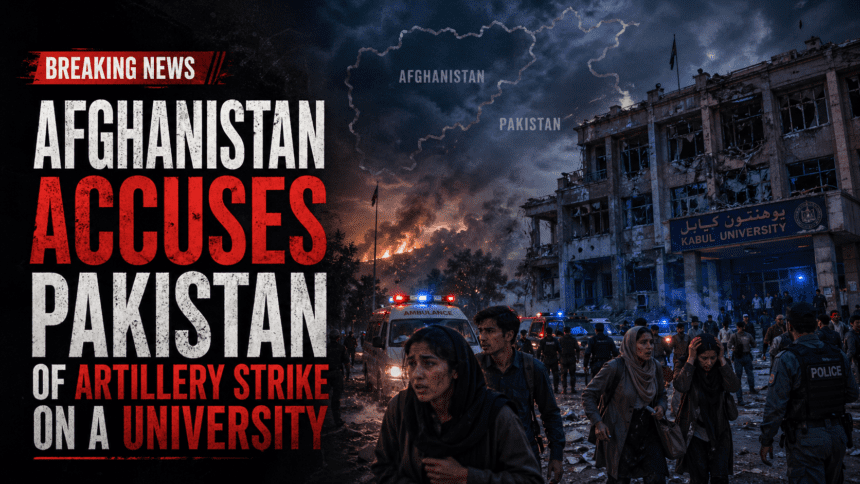
Afghanistan has accused Pakistan of carrying out mortar and missile strikes that hit a university and other civilian areas in the eastern province of Kunar, in what officials there say is the deadliest cross-border attack since recent peace efforts briefly lowered tensions. Afghan authorities said the strikes on April 27, 2026 hit Asadabad and nearby areas, damaging Sayed Jamaluddin Afghani University and residential neighborhoods. They reported 7 people killed and 85 wounded, including women, children and students.
Pakistan has denied targeting the university. Its position is that reports of a strike on the campus are false and that any military action was precise and intelligence-based, aimed at militant targets rather than civilian infrastructure. That denial has left the two sides pushing sharply different versions of what happened, even as images and local accounts from Afghanistan intensified anger over the incident.
The university at the center of the dispute is a public institution in Asadabad, the capital of Kunar province. That matters because the allegation is not about a remote border outpost or an isolated patch of countryside. It is about damage to a known civilian educational site in a provincial capital, which raises the political and diplomatic stakes immediately.
The latest clash comes at an especially fragile moment. It is being described as the first major burst of violence since talks earlier in April, including Chinese-mediated diplomacy, tried to cool months of cross-border conflict between Afghanistan and Pakistan. Those efforts had followed a period of heavy fighting, airstrikes and shelling that already left the relationship deeply strained. The new accusations now threaten to undercut whatever limited space for de-escalation had opened up.
This is also not an isolated accusation. In late March, Afghan officials had already blamed Pakistani shelling around Asadabad for killing one person and injuring at least 16 others. Pakistan, for its part, has repeatedly said it is acting against militants operating from Afghan territory, especially the Tehrik-e-Taliban Pakistan, while Kabul denies giving such groups sanctuary. That broader dispute has become the central driver of the current confrontation.
What makes this incident stand out is the symbolism of the target. When a university is named in a cross-border strike allegation, the story moves beyond the usual military language of border security and counterterrorism. It becomes a story about civilian harm, state credibility and whether any ceasefire or peace track can survive on the ground. Pakistan says the university was not targeted. Afghanistan says it was hit. Right now, that gap is the story.
For now, the immediate facts remain contested, but the consequences are already visible: more civilian casualties, more mistrust, and another setback for a relationship that has been spiraling through repeated accusations, denials and retaliatory threats for months. Unless both sides can restore some kind of credible mechanism for verification and restraint, this episode is likely to harden positions rather than calm them.