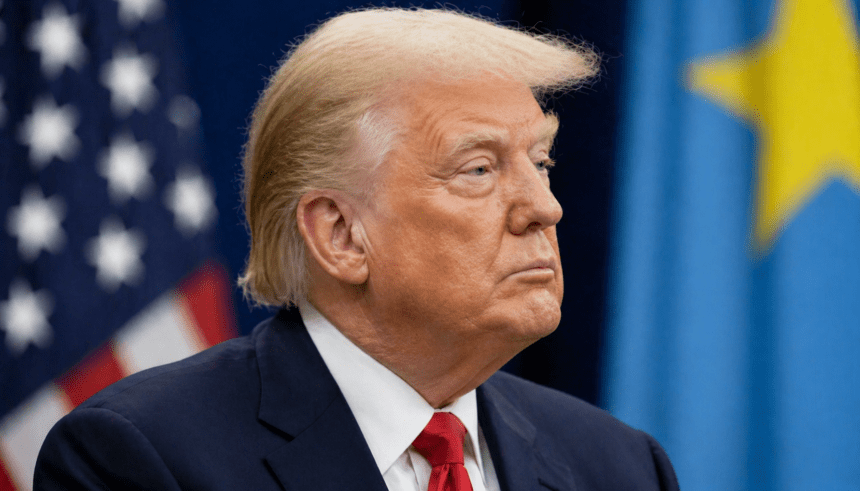
President Donald Trump is facing a rough stretch in public opinion, with a run of new polls showing his standing weakening as voters grow more frustrated over prices, fuel costs and the broader direction of the economy. A Reuters/Ipsos poll released April 21 found only about a quarter of Americans approved of Trump’s handling of inflation and rising prices, while his overall job approval sat in the mid-30s. An AP-NORC poll published the same day painted a similarly bleak picture, putting his overall approval at 33% and his approval on the economy at 30%.
That helps explain why the phrase “record low” has started showing up again in coverage. Reuters/Ipsos found Trump’s approval had already fallen to 36% in a March 20-23 survey, which Reuters described as the lowest point of his second term at that stage. The April Reuters/Ipsos release then showed that even where Trump has typically been more competitive, like immigration and crime, his ratings were still only around 40%, while his numbers on prices lagged badly behind.
The economy is clearly at the center of the problem. AP-NORC said 72% of Americans now believe the country is headed in the wrong direction, 73% describe the economy as poor, and only 23% approve of Trump’s handling of the cost of living. That is a sharp warning sign for a president who returned to office promising to bring prices down quickly and restore a sense of stability.
Other polling released over the past week points in the same direction. Gallup’s latest economic confidence reading fell 11 points in April to -38, the lowest level since late 2023, while ABC News, summarizing several fresh surveys, reported that nearly three-quarters of Americans say the economy is getting worse. ABC also cited a Fox News poll showing 66% disapproval of Trump’s handling of the economy, matching a record low in approval across both of his terms, and a Marquette Law School poll showing broad disapproval of his approach to inflation and the cost of living.
There is also a more personal layer to the discontent. New Gallup data, reported Tuesday, found that 55% of Americans say their financial situation is getting worse, the highest share recorded in that survey since 2001. Cost of living was the top concern for 31% of respondents, and energy costs jumped sharply as a cited problem. The same report noted average gasoline prices had climbed above $4 a gallon after being below $3 before the Iran war began in late February, adding a very real kitchen-table strain to the political fallout.
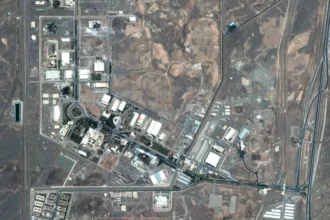
That Iran conflict keeps showing up in the numbers. AP-NORC explicitly tied the drop in Trump’s economic ratings to higher gas prices during the war, and Reuters/Ipsos found only 35% approved of Trump’s strikes on Iran in its late-March poll. Even among Republicans, AP-NORC said support had softened somewhat, especially outside the president’s most loyal MAGA base. It is not a collapse inside his party, exactly, but it is the kind of erosion that can become dangerous fast when a White House is already taking heat on prices.
For Trump, the political risk is obvious. Voters may still split on immigration, crime or foreign policy, but the cost of living tends to cut through ideology. When people feel groceries, rent and gas are all biting harder than they expected, approval ratings usually follow. And right now, the latest polling suggests that is exactly what is happening. With the 2026 midterms drawing closer, the White House is running into a familiar problem: people don’t grade the economy on rhetoric. They grade it at the checkout counter and at the pump.