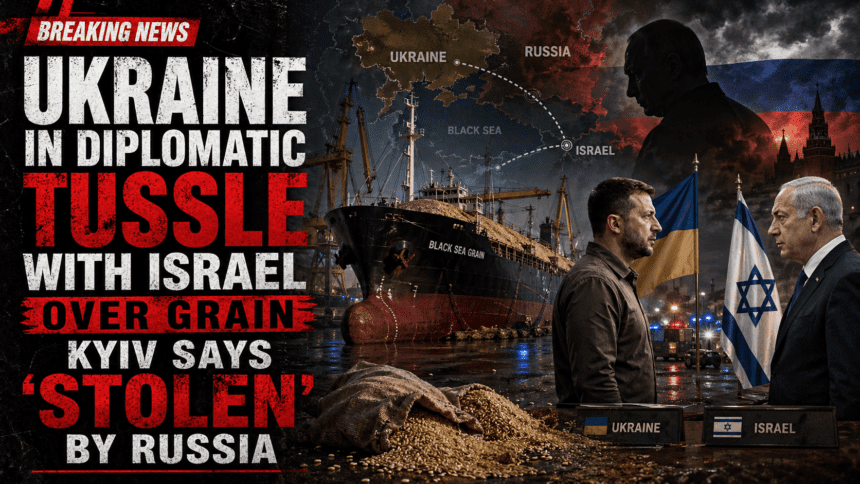
Ukraine and Israel have slid into a sharp diplomatic dispute after Kyiv accused Israel of allowing grain allegedly taken by Russia from occupied Ukrainian territory to reach Haifa, turning a trade complaint into a broader political clash over sanctions, evidence and wartime accountability. Ukrainian President Volodymyr Zelenskyy said a vessel carrying the grain had arrived at an Israeli port and warned that sanctions could be imposed on those involved.
At the center of the row is Ukraine’s claim that the cargo did not originate in Russia proper, but was looted from areas of Ukraine under Russian occupation and then moved through disguised shipping routes. Ukrainian officials say this is not an isolated case. They allege that several shipments have reached Israel since 2023 using concealment methods such as transshipment and document masking to obscure the grain’s true origin.
Israel has rejected the accusation in its current form and says Ukraine did not provide enough evidence or the necessary legal basis in time. Israeli officials have argued that the ship in question had not formally entered port or submitted its full documents when the public accusations were made, and they criticized Kyiv for escalating the issue in public before the process was complete.
That response has only deepened frustration in Kyiv. Ukraine says it had already warned Israeli authorities in advance and had formally asked for action, including the seizure of suspect cargoes. Ukrainian officials now appear to be framing the matter not just as illicit trade during wartime, but as a test of whether partner countries are willing to block the commercialization of resources taken from occupied land.
The dispute matters because it sits at the intersection of war, sanctions and diplomacy. For Ukraine, allowing such shipments to proceed risks normalizing what it sees as the monetization of occupation. For Israel, the issue is more complicated, tied to legal thresholds, evidentiary standards and its often delicate balancing act in relations involving both Ukraine and Russia. That wider tension is what has turned one grain shipment into a diplomatic confrontation.
What remains unresolved is the evidentiary question. Ukraine is adamant the grain is stolen. Israel says the claim has not yet been substantiated to the standard needed for enforcement action. Until that gap closes, the row is likely to remain less about cargo paperwork and more about political trust between the two governments.