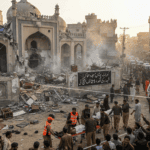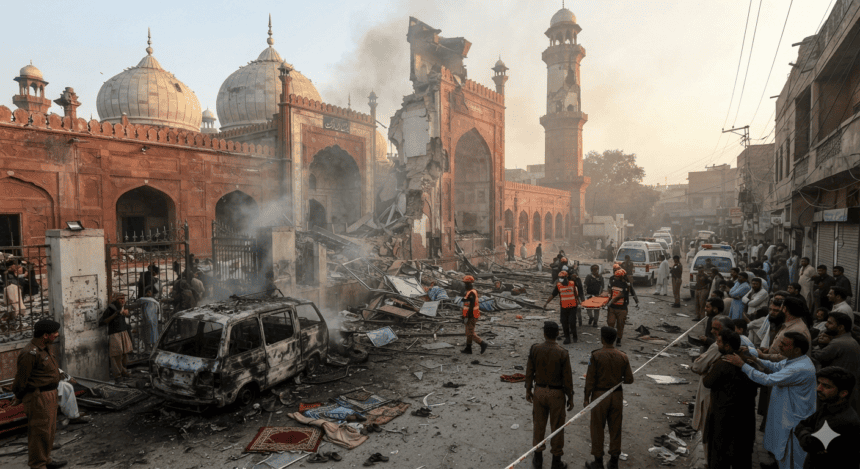
The explosion tore through the mosque during evening prayers, collapsing the roof and trapping dozens under the debris. Local police confirmed the death toll has reached 21, with rescue workers still pulling victims from the rubble in the remote district of Khyber Pakhtunkhwa.
The blast occurred shortly after sunset. Witnesses described a deafening roar followed by thick clouds of dust and smoke that engulfed the building. By the time emergency crews arrived, the main prayer hall had been reduced to concrete and twisted steel.
“We were in the middle of the second rakat when the floor seemed to jump,” said Mohammad Amin, a survivor who was near the back entrance. He escaped with minor shrapnel wounds, but he lost two cousins in the collapse.
The death toll is expected to rise. Local hospitals have issued an urgent appeal for blood donations, as surgeons struggle to treat dozens of patients suffering from severe burns and blast-related injuries. Many of the wounded remain in critical condition.
No group has claimed responsibility for the attack yet. However, the region has seen a sharp uptick in violence over the last six months, with militant factions targeting both security checkpoints and soft civilian targets. Investigators on the scene recovered vehicle parts scattered nearly 50 meters from the impact site, suggesting a high-yield explosive device was hidden inside a truck parked directly against the mosque’s outer wall.
Security forces have cordoned off the area to allow for the recovery operation. The provincial government declared a three-day mourning period, though the move has done little to calm the anger of local residents who gathered outside the hospital gates, demanding better protection for their community.
“This wasn’t just an attack on a building,” said local community leader Abdul Rahim. “They chose a time when the house of God was full. There is no political motive that justifies this.”
As night fell, rescue crews continued their work under floodlights, using hand tools to avoid shifting the unstable remains of the structure. For the families waiting in the hospital corridors, the search for survivors has effectively turned into a search for closure.