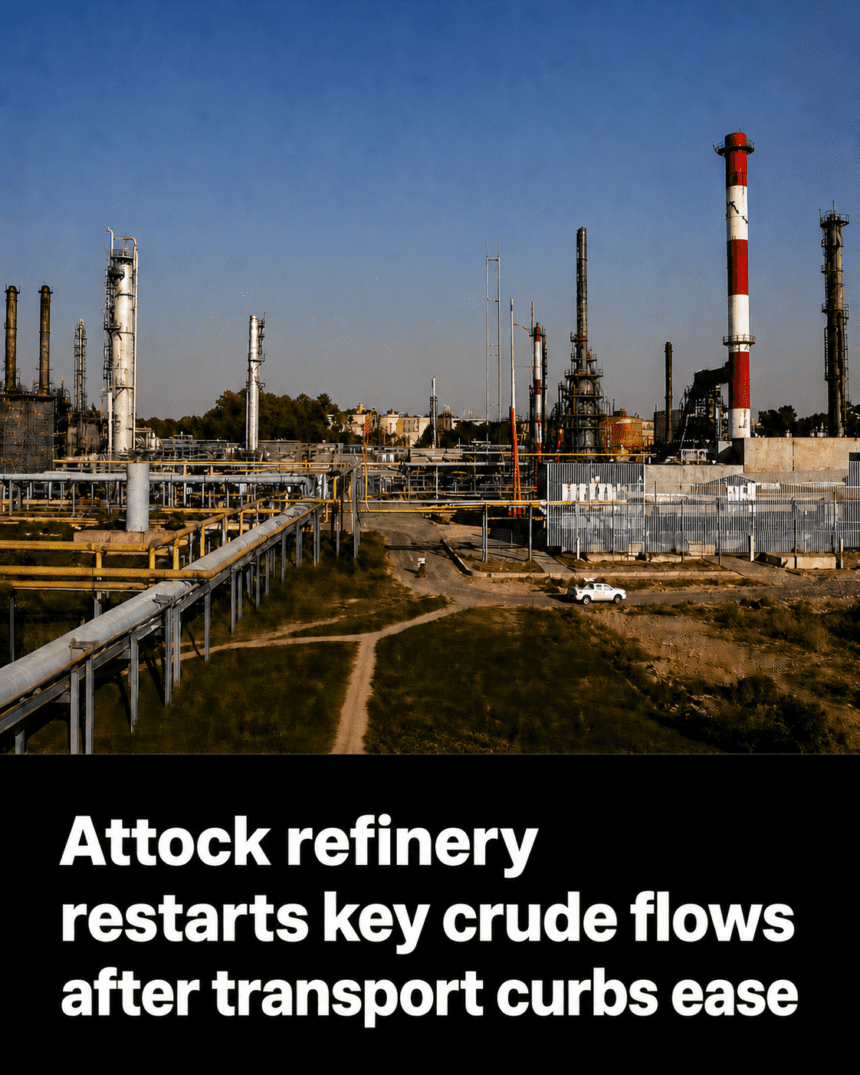
Attock Refinery Limited has moved to restore normal operations after a brief logistics squeeze disrupted tanker traffic and forced the shutdown of its main crude distillation unit. In a filing to the Pakistan Stock Exchange dated April 23, the company said crude receipts and product dispatches through oil tankers had “started to normalise” after intervention by relevant authorities, and that it expected normal operations to resume within the next few days.
The disruption had hit a day earlier. ARL told the exchange on April 22 that the expected arrival of foreign delegates in Islamabad had led to an abrupt suspension of oil tank lorry movement to and from the refinery, hurting both crude supply and product dispatches. The company said stocks of Motor Spirit and High-Speed Diesel had risen sharply while crude receipts fell, leaving it little room but to shut its main HBU-I unit, which has a capacity of 32,400 barrels per stream day.
That quick turnaround matters because Attock is the main refinery serving northern Pakistan, and even a short interruption tends to raise concern in fuel markets. Local coverage after the restart said tanker movement resumed late Wednesday after authorities stepped in, easing immediate worries about supply bottlenecks in the region.
What stands out here is how narrow the window was. The refinery was not dealing with a technical fault inside the plant, at least not from what the company disclosed. This was a transport problem, plain and simple: roads tightened, tankers stopped moving, stocks piled up on one side while crude inflows weakened on the other. Once that pressure eased, the company said the flow of crude and refined products began returning to normal.
The episode also underlines a broader vulnerability in Pakistan’s fuel chain. Refinery operations can be thrown off not only by demand swings or maintenance shutdowns, but by traffic and security controls that interrupt the road-based movement of crude and finished products. In this case, ARL’s own notices suggest the disruption was temporary, but sharp enough to force an immediate operational response.
For now, the company’s message is fairly straightforward: the worst of the disruption appears to have passed, tanker logistics are improving, and the refinery expects to be back to normal shortly. Markets will probably keep watching dispatch patterns and any follow-up company notice, just to see whether “within the next few days” holds.