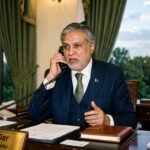
Finance Minister Muhammad Aurangzeb said Pakistan values China’s continued support for its IMF programme after meeting senior Chinese officials on the sidelines of the World Bank-IMF Spring Meetings in Washington, as Islamabad works to keep its economic reform drive on track and shore up external financing.
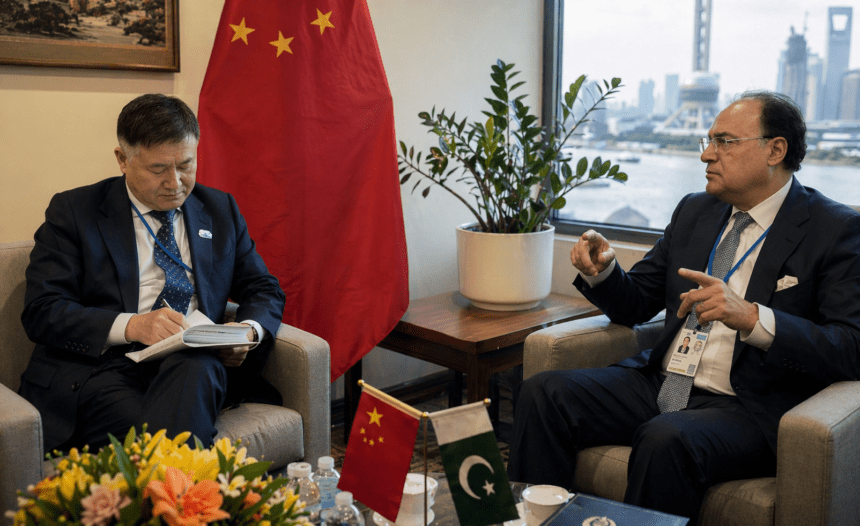
In the Chinese leg of his meetings, Aurangzeb met Dr. Pan Gongsheng, president of the People’s Bank of China, and separately held talks with Chinese Finance Minister Lan Fo’an, according to Pakistani official readouts and local media reports. The Pakistani side said the discussions covered the country’s reform agenda, financial cooperation and China’s role in supporting Pakistan during its programme engagements with the IMF.
One official statement said Aurangzeb thanked Beijing for its “long-standing and unwavering bilateral support” and also acknowledged the “constructive role” played by China’s executive director at the IMF in facilitating Pakistan’s programme discussions. That line matters. It underlines something Pakistani officials have been signaling for months: China is still seen in Islamabad as one of the key external partners helping the country navigate a difficult reform period without losing financial stability.
The Washington meetings come at a sensitive moment for Pakistan’s economy. The IMF’s country page shows Pakistan is currently under a 37-month Extended Fund Facility, while the Fund said in March that its staff had reached understandings with the authorities on the third review of the EFF and the second review of the Resilience and Sustainability Facility. An IMF Executive Board decision would be the next formal step.
That is why Chinese support carries weight well beyond diplomatic optics. Pakistan has been trying to convince lenders, investors and bilateral partners that the reform process is not just alive, but beginning to deliver. Aurangzeb’s broader Washington schedule reflects that effort: more than 50 engagements were lined up with IMF and World Bank officials, development partners, investors and foreign counterparts.
Officials say Aurangzeb used the meetings to brief counterparts on Pakistan’s macroeconomic picture, reform measures and financing needs. In the discussions with the Chinese side, he also pushed for deeper financial cooperation and market access, according to the official account of his meeting with the PBOC chief.
The bigger backdrop is familiar, even if the tone out of Islamabad has become more confident. Pakistan is still balancing IMF conditions, debt management pressures and the constant need for external support. Recent reporting ahead of the Washington trip said the government was simultaneously seeking help from partner countries and exploring ways to strengthen reserves as it manages a fragile external position.
China’s importance in that equation is hard to miss. Beyond being Pakistan’s largest strategic partner in infrastructure and investment, Beijing has repeatedly featured in Pakistani economic diplomacy whenever the country has needed breathing room on financing, debt rollovers or international confidence-building. So when Aurangzeb publicly thanks Beijing for backing the IMF programme, he is sending two messages at once — one to the Fund and one to the markets. Pakistan, in effect, wants it known that its reform effort still has heavyweight support behind it.
There was no dramatic announcement after the meetings, and maybe that’s the point. For Islamabad, steady reassurance may be more useful right now than flashy headlines. The government appears keen to show that the IMF track remains intact, bilateral relationships are working, and major partners like China are still prepared to stand by Pakistan as the next phase of programme implementation unfolds.