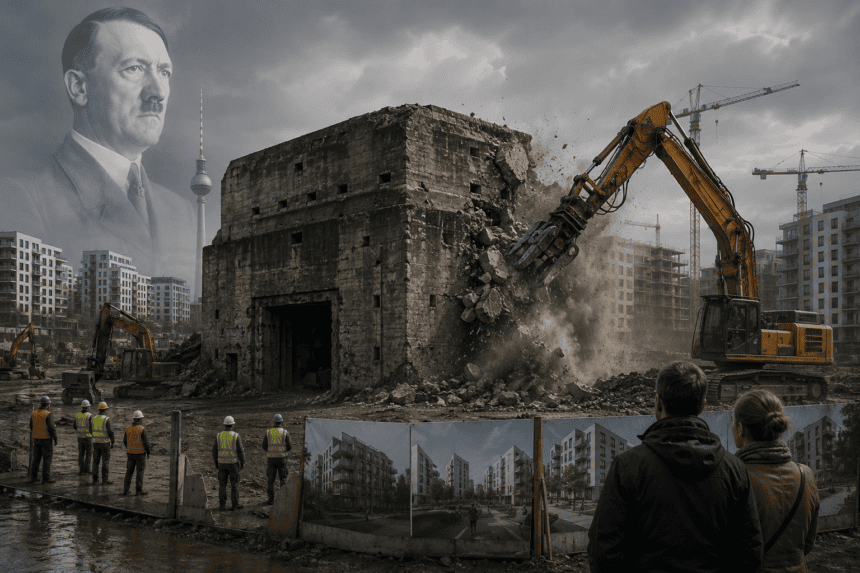
Berlin is tearing down one of its final links to the Third Reich. A concrete bunker in the capital’s Neukölln district, a structure once intended to provide shelter for Nazi officials, is slated for demolition. The site is being cleared to make way for new residential apartments—a move that underscores the city’s desperate struggle to reconcile its dark history with an urgent need for modern housing.
For decades, the bunker sat largely forgotten, buried beneath layers of urban development. While many of Berlin’s wartime structures were destroyed in the immediate aftermath of the Allied victory, this particular site remained, a hulking reminder of a regime that left the city in ruins. Now, the city’s housing crisis is forcing a choice: preserve the concrete remnants of the past or prioritize the living needs of the present.
Critics of the demolition argue that the bunker serves as a vital historical marker. They contend that erasing these sites sanitizes the city’s landscape, stripping away the physical scars that serve as warnings for future generations. For them, the bunker isn’t just a piece of property; it’s a site of memory.
Yet, local officials and developers face a different reality. Berlin’s rental market is among the most strained in Europe. With waitlists for affordable housing stretching into the thousands and prices surging, the city has little room for sentimentality regarding derelict, non-functional structures. The land, located in a sought-after neighborhood, is viewed as a wasted asset that could house dozens of families.
The demolition process is complex. These bunkers were built to withstand heavy bombardment, constructed with reinforced concrete thick enough to resist almost anything the Allied forces could throw at them. Taking them down is not a simple task; it is a labor-intensive, expensive engineering challenge that requires specialized equipment and significant time.
The site won’t be entirely forgotten. City planners have noted that historical documentation and some onsite plaques will likely be integrated into the design of the new residential complex. It is a compromise—a way to acknowledge the history of the soil without letting it dictate the future of the neighborhood.
Construction is expected to begin once the site is cleared and the final environmental assessments are filed. By next year, the bunker will be gone. In its place, a new apartment building will rise, housing residents who—like the rest of Berlin—are trying to build a future in a city that can never fully escape its past.